|
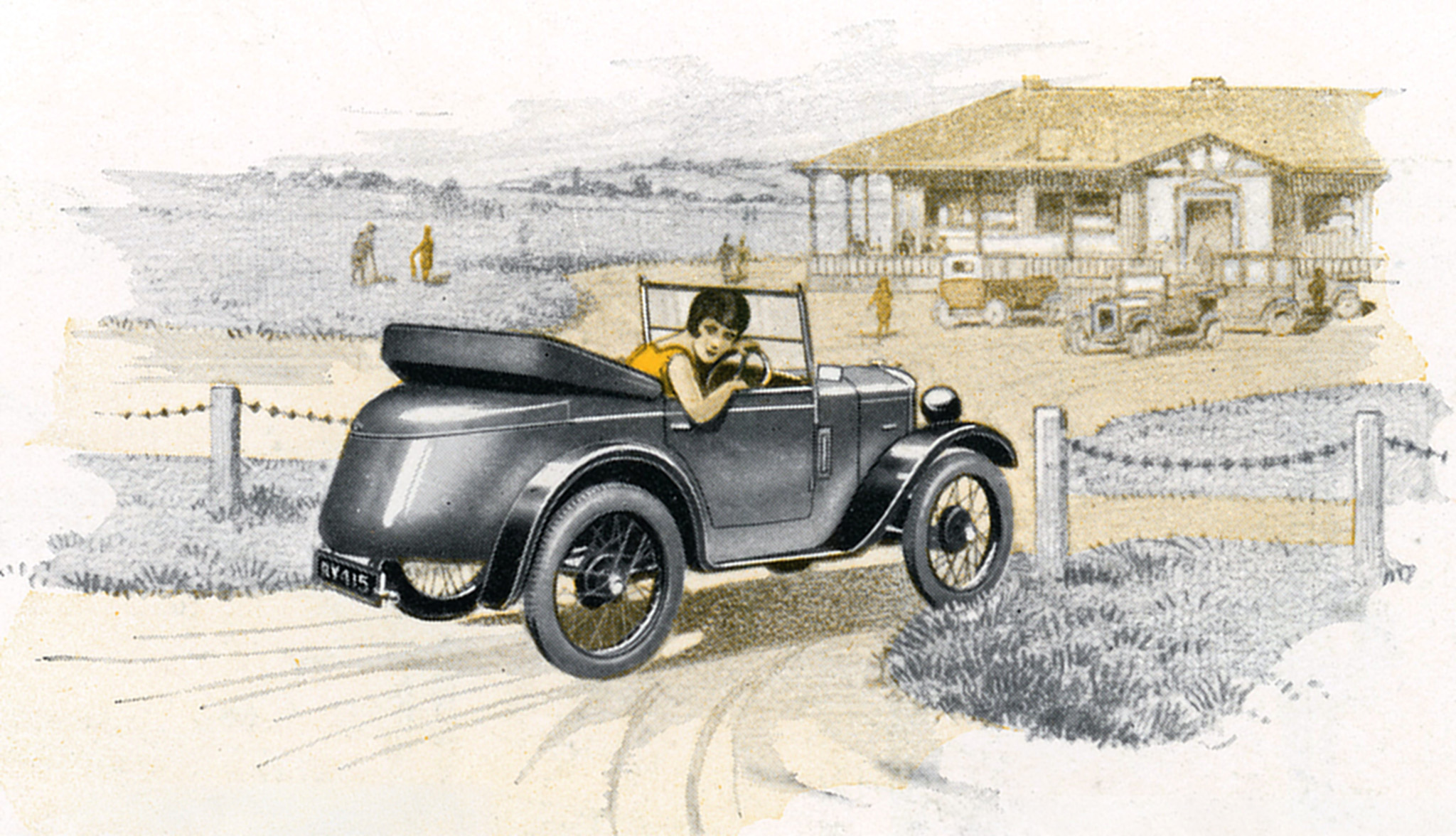
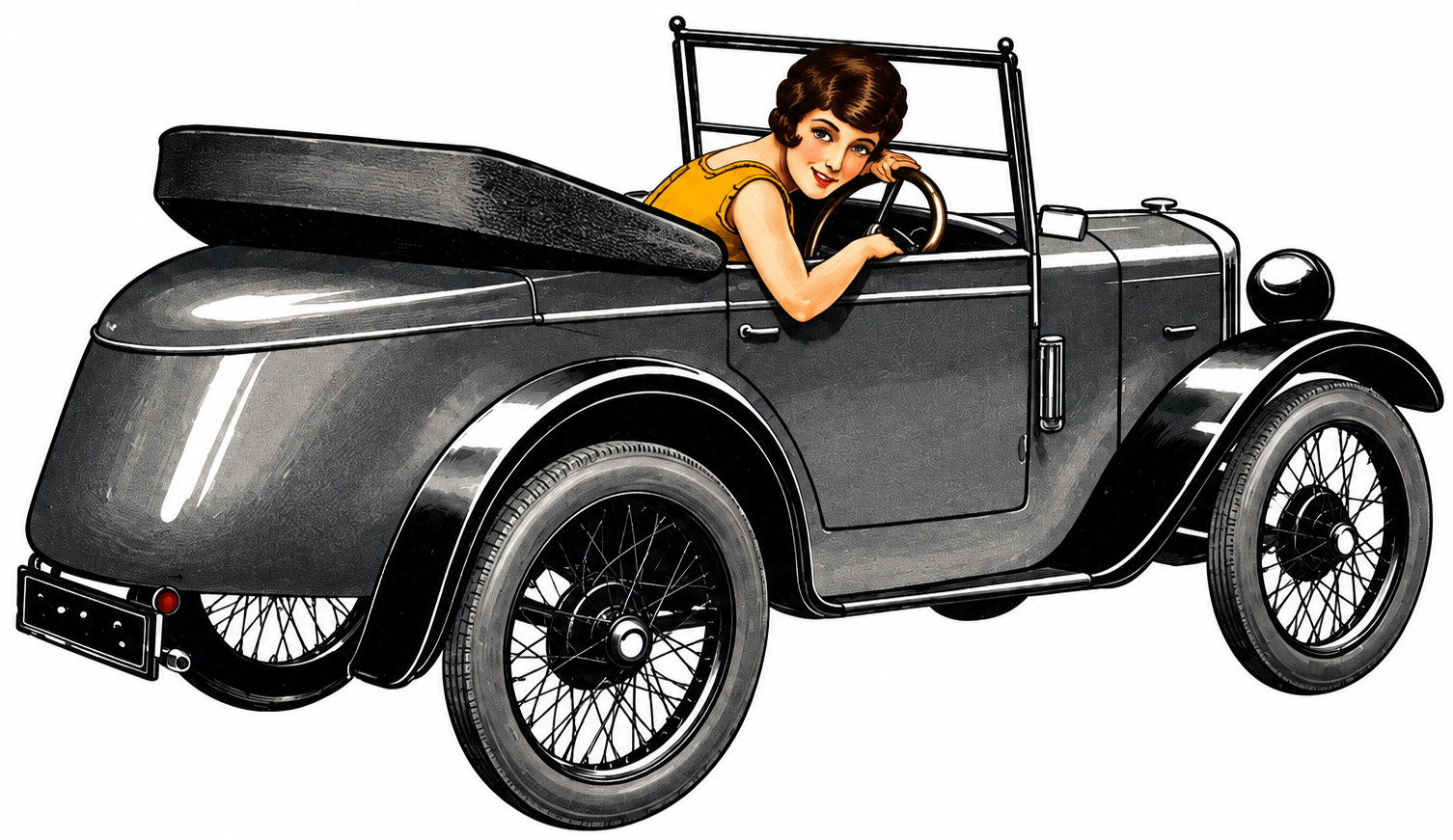
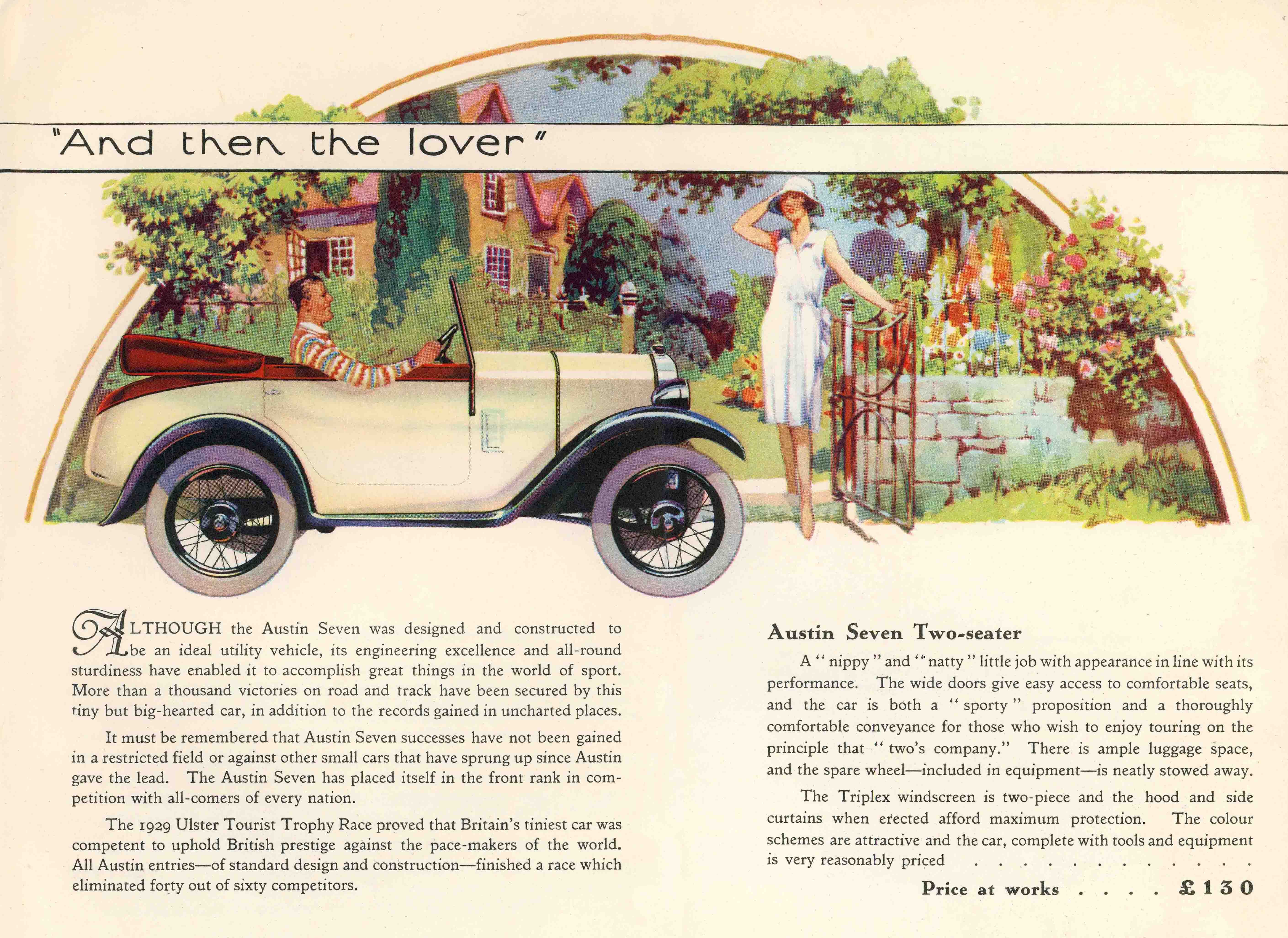
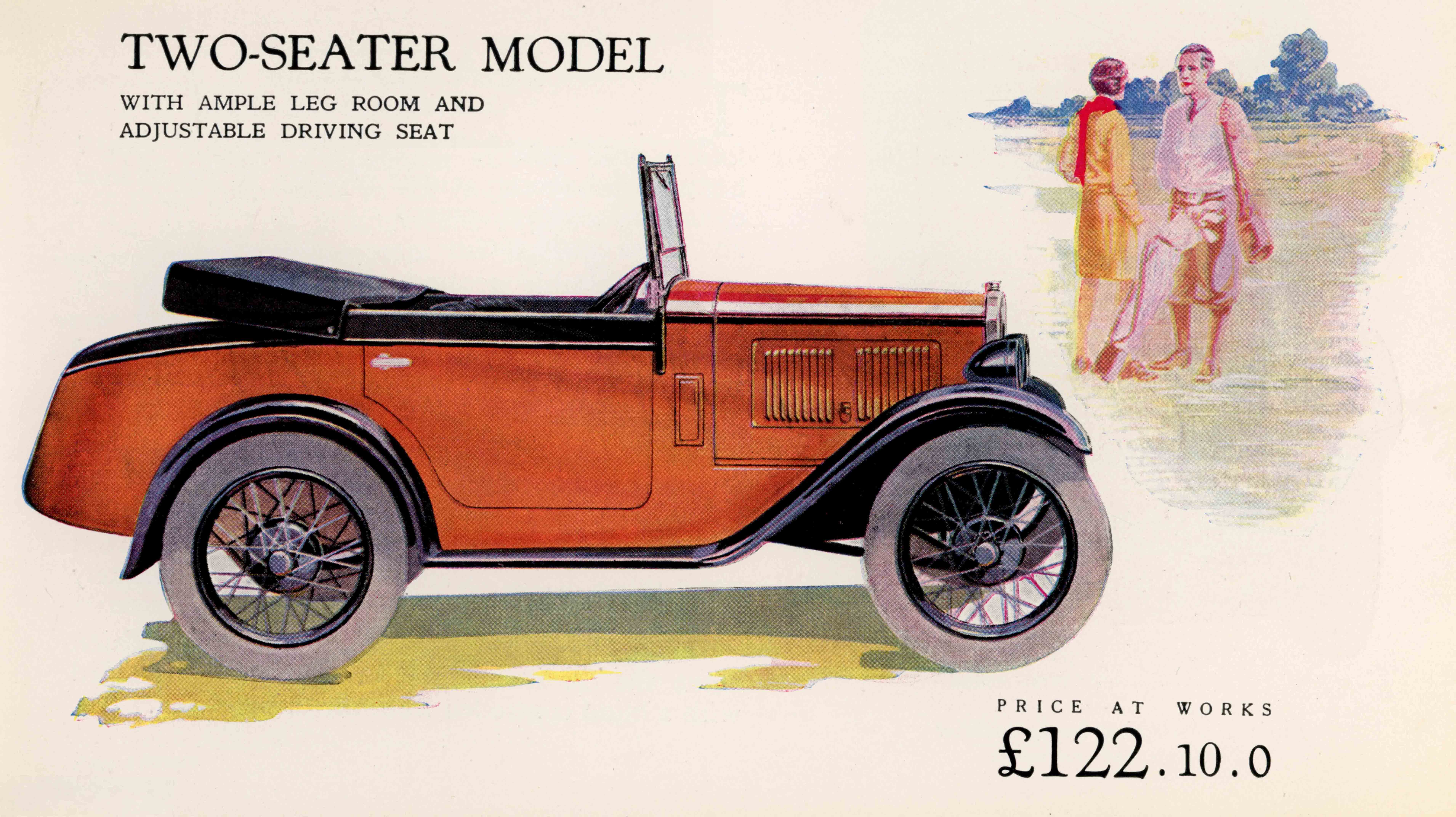
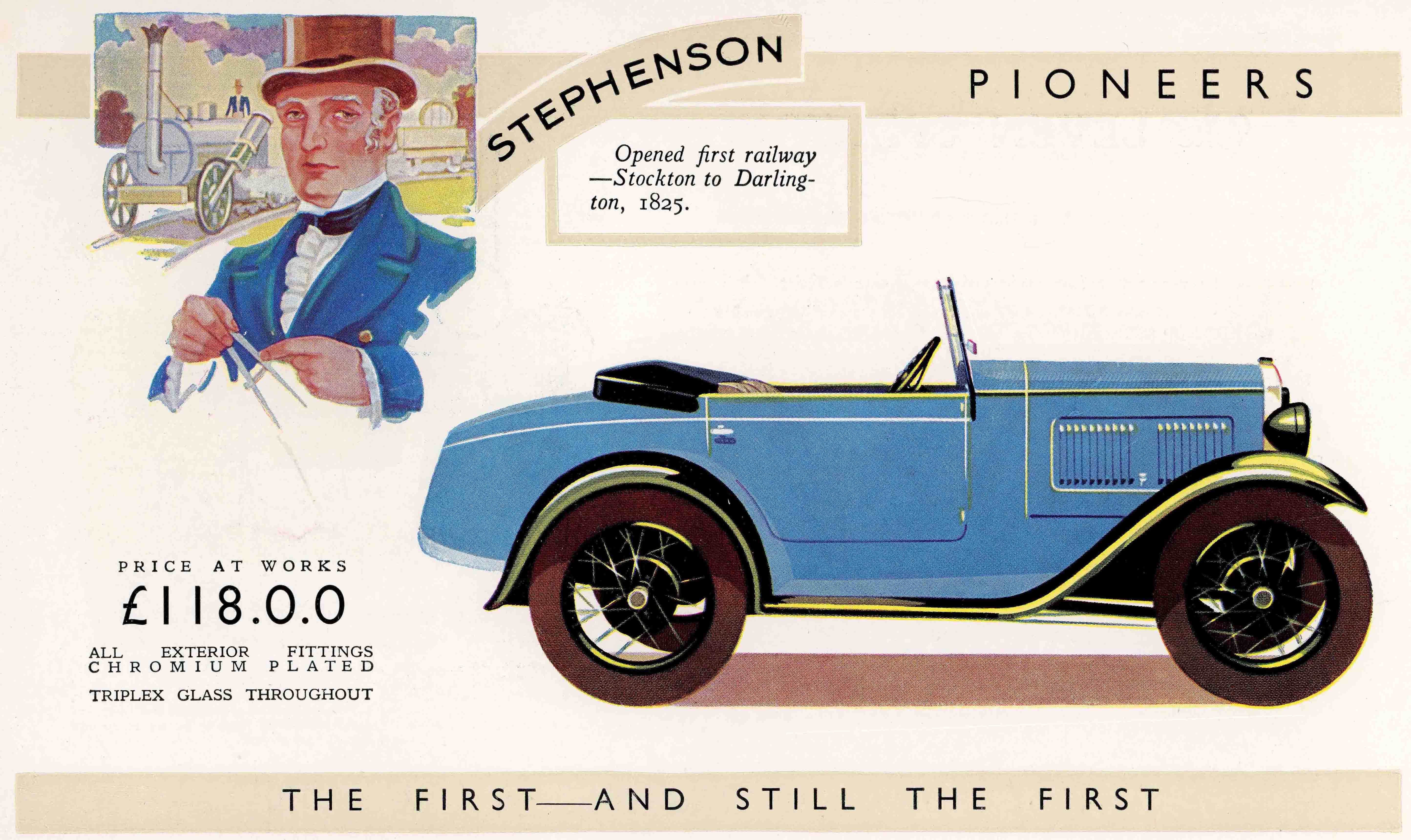
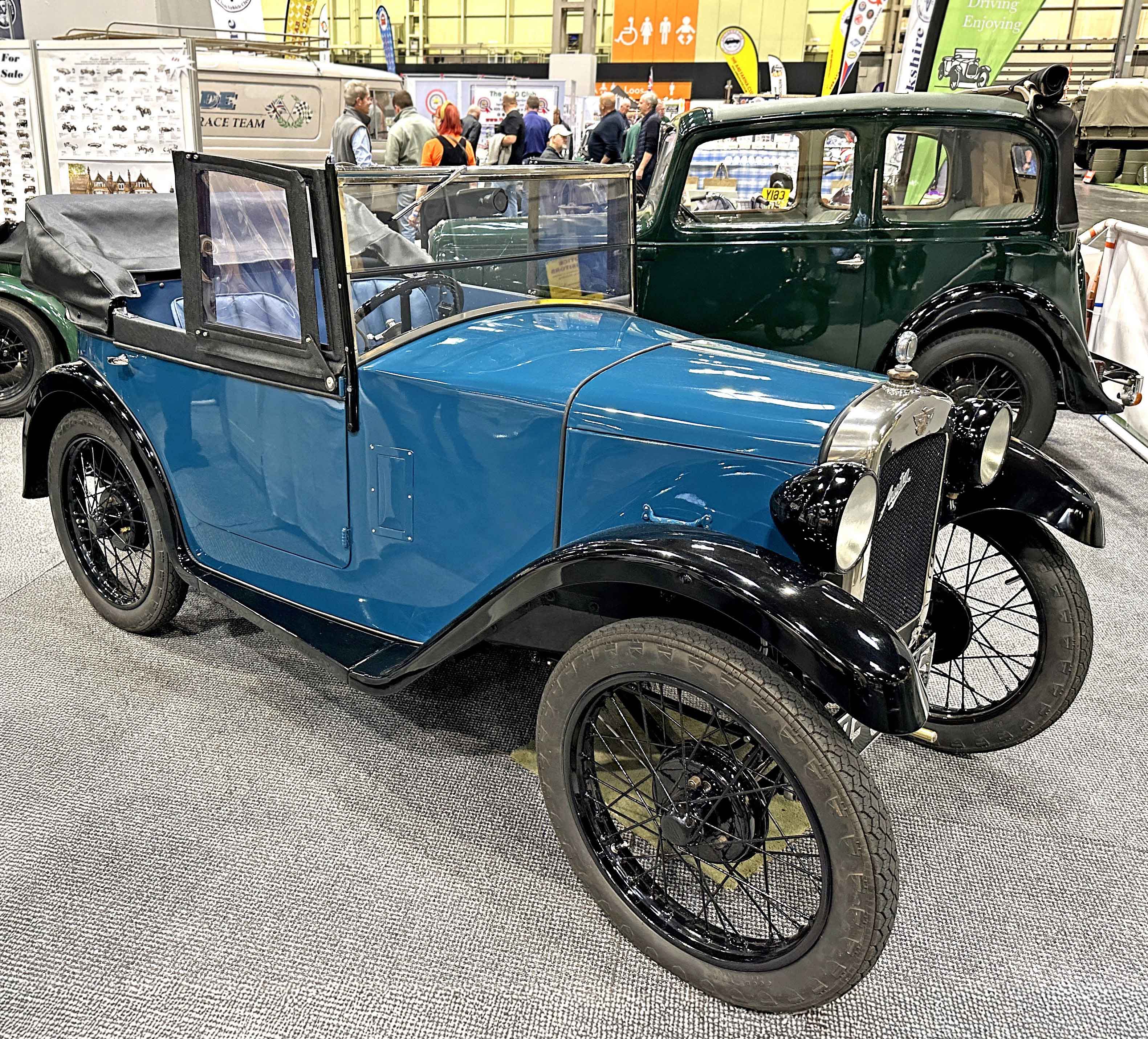
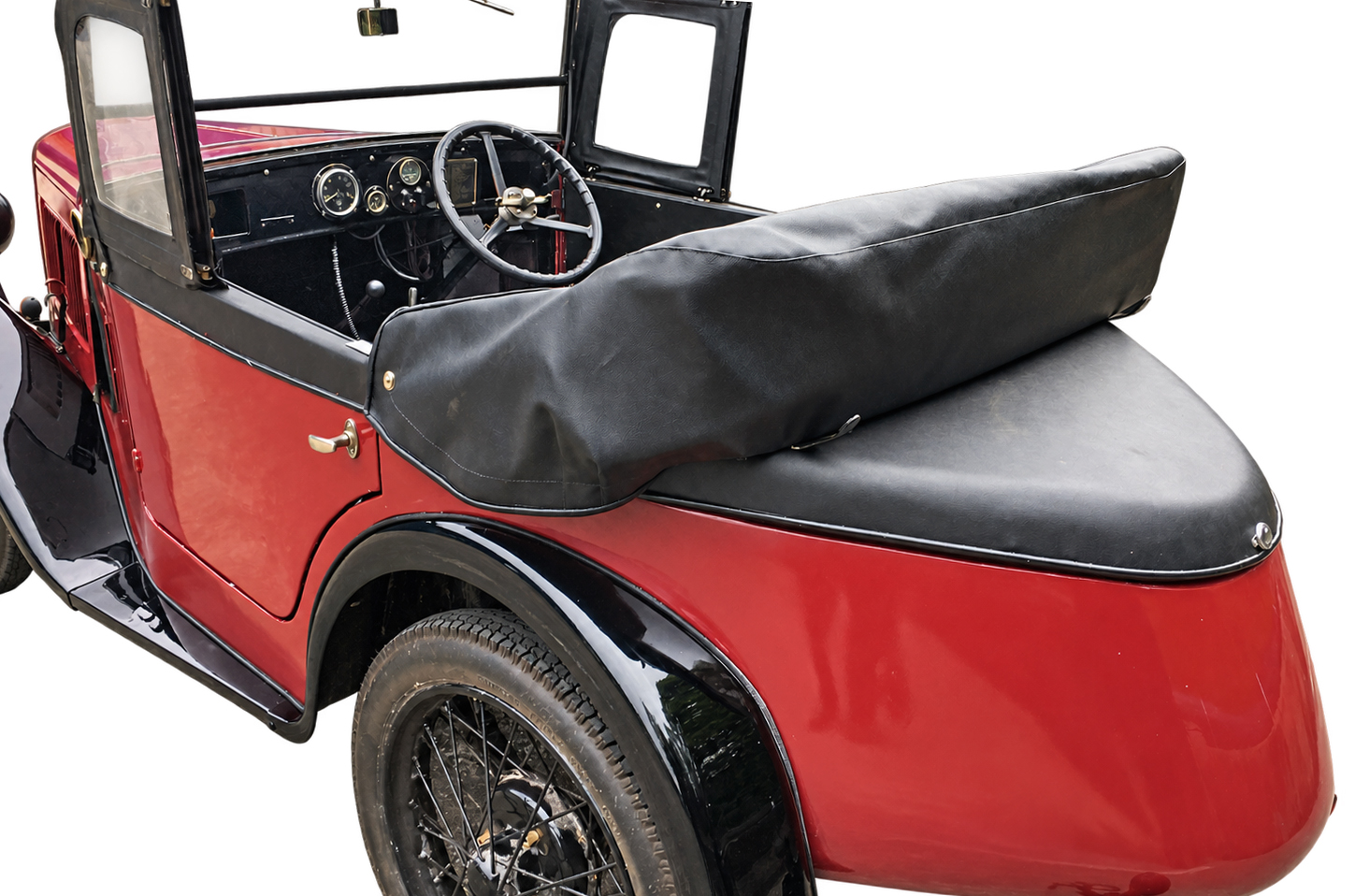
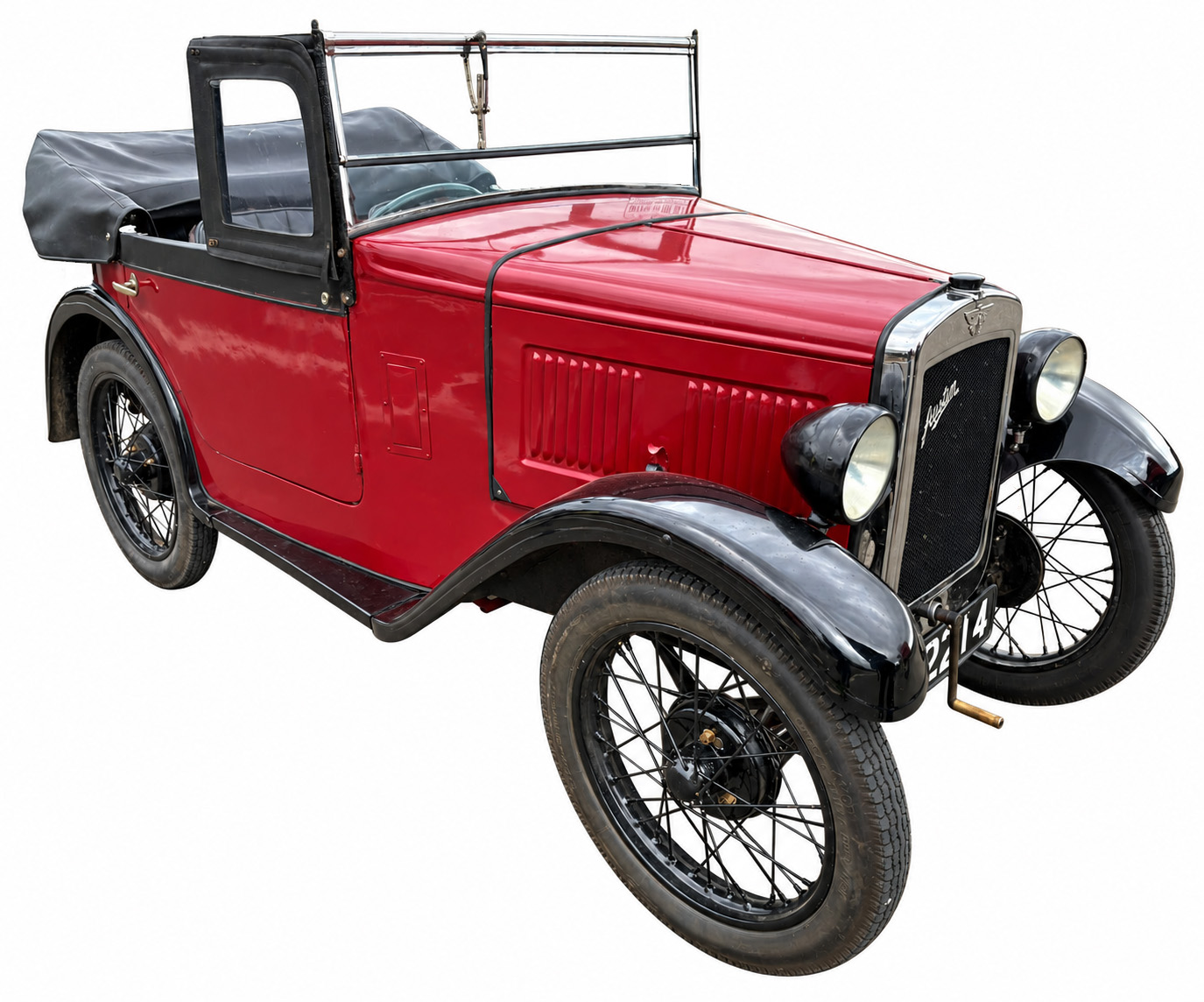
The Austin Motor Company's first non-sporting open two-seater in its ordinary production range was the "Boat-tail". Announced in 1929, although the exact month is uncertain, it was built in four confirmed versions, the first three, the P, PA, PB with aluminium bodies, and the forth, the PC,probably in steel. The word 'confirmed' is used because the factory Index Cards listing specification changes mention two other models, the PL and PF, the former a short-bonnet, long-scuttle model and the latter a short-scuttle, long-bonnet type. The PL is listed as having a 'fabric body' and the PF as 'fabric on metal'. As no survivors of these types are known, is there any other evidence that the PL and PF were in regular production? Searching through the Index Cards, I found further references to them in the sections for: dashboard-to-steering column brackets, battery box (also listed for the RG fabric Saloon), petrol tank (PL only), and the windscreen (for the PL only, but also the PB and PC). The index cards also make references to another Two-seater written 'PE' (in capitals with no superscript), but this refers to the later "Ruby-cowled" version (generally known as the Opal), where one option was a bench seat.
Now, does the description 'fabric body' really mean a traditionally constructed fabric body, or was this an error, and meant to be 'fabric on metal'? If so, by now these cars may have lost their fabric covering to a paint finish; to date in 2026, neither type in its original finish has been identified as a survivor.
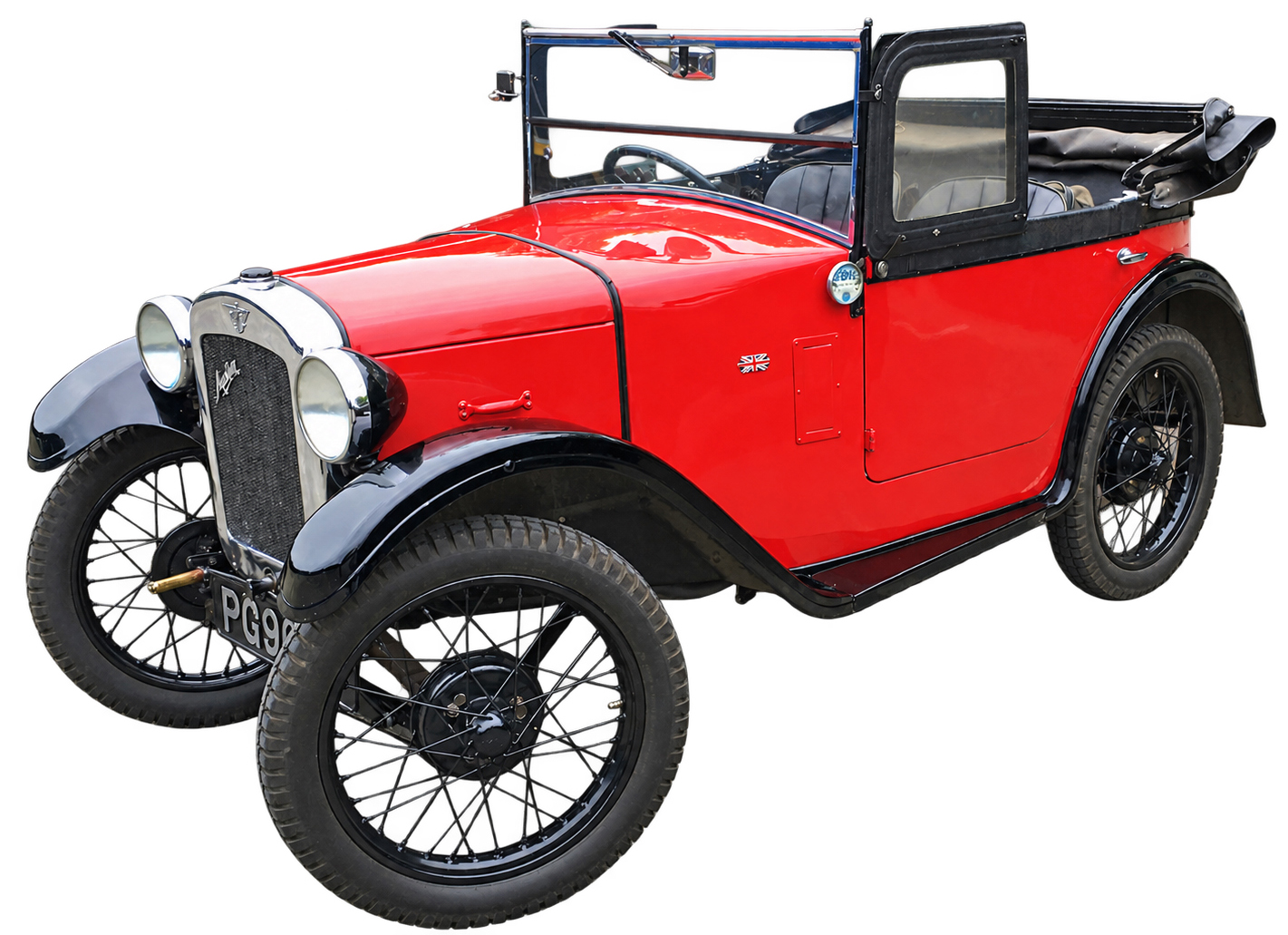
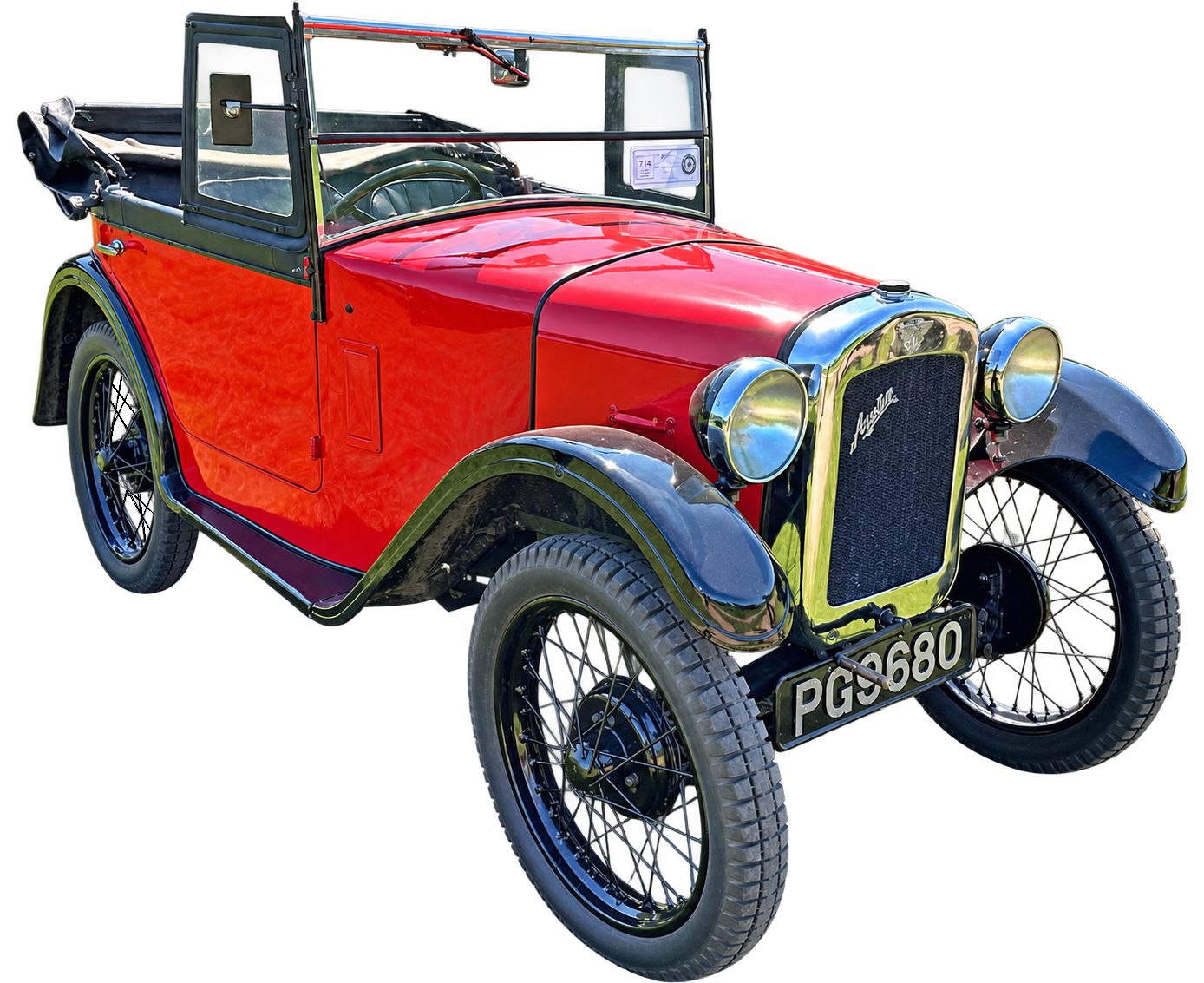
The P-Type had a low-profile body and was fitted with larger, distinctive front wings with a domed profile and smoothly finished edges designated Types 'E' and 'F' depending on their overall length - these replacing the earlier narrow 'blade' type used on all models until September 1929. However, some unconfirmed sources claim the Boat-tail was the first model to use them and must therefore have been fitted with them earlier. I doubt the latter; the official Austin "Wings and Running Boards" publication states that from September 1929 all models were fitted with wings types E or F.
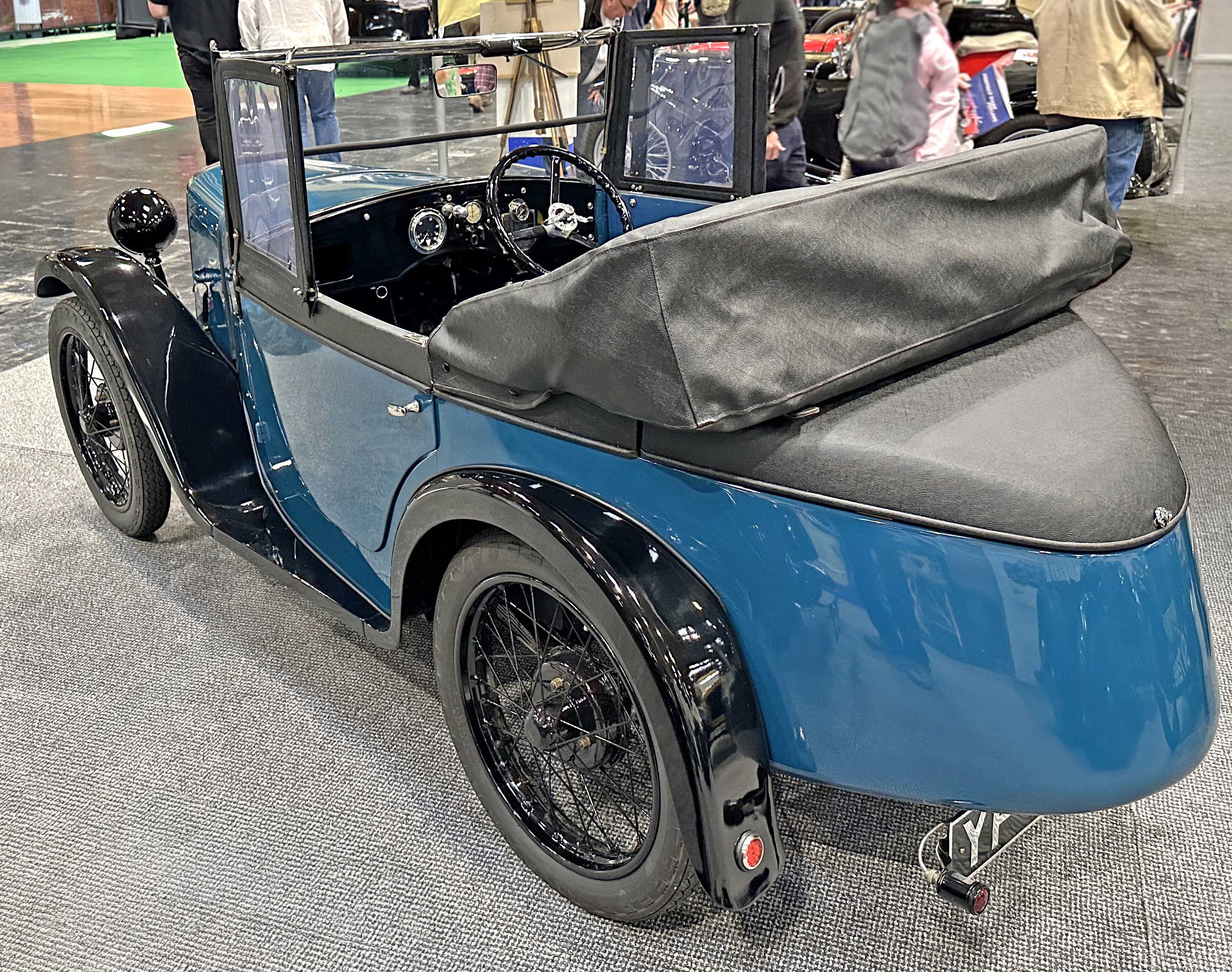
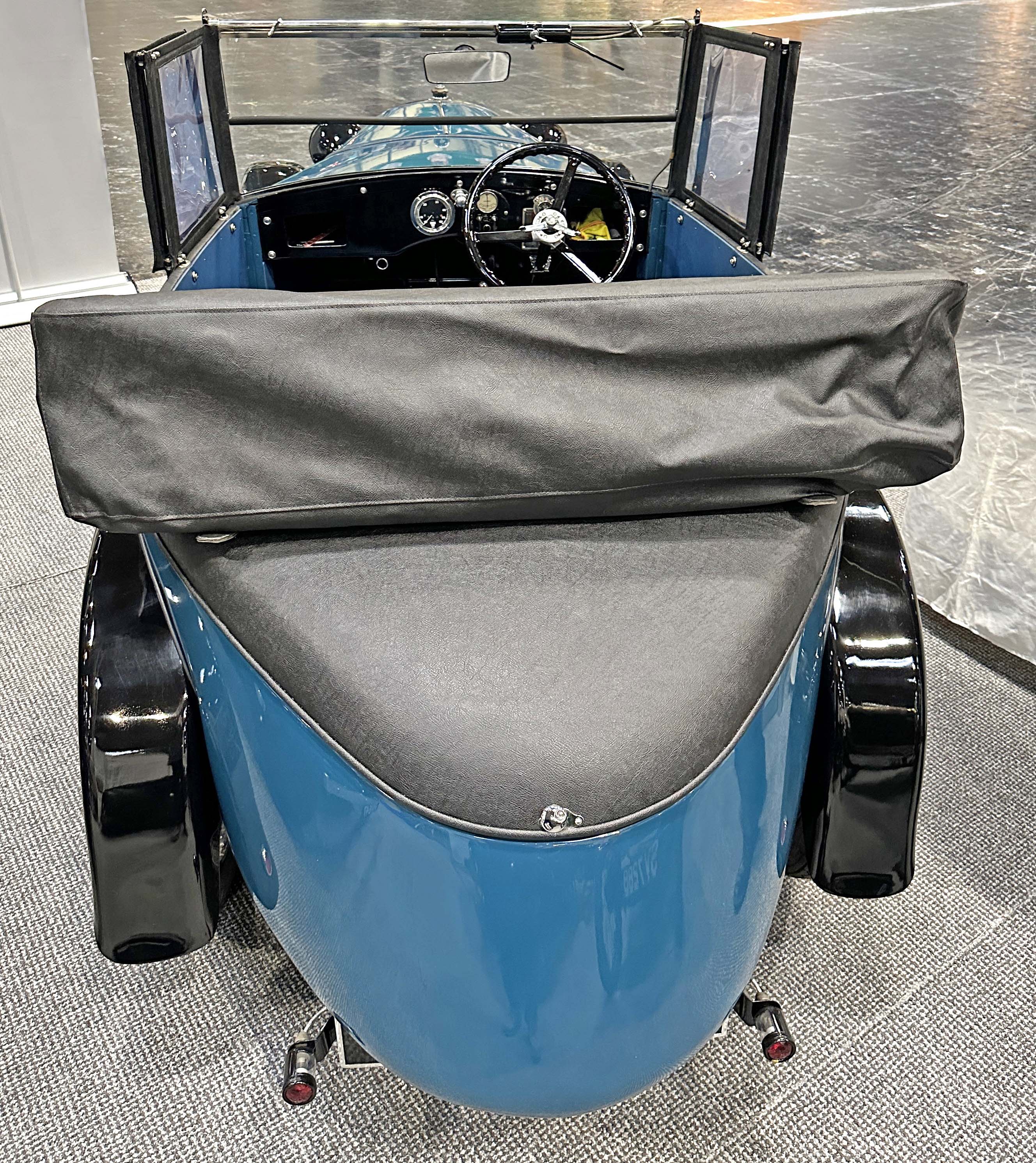
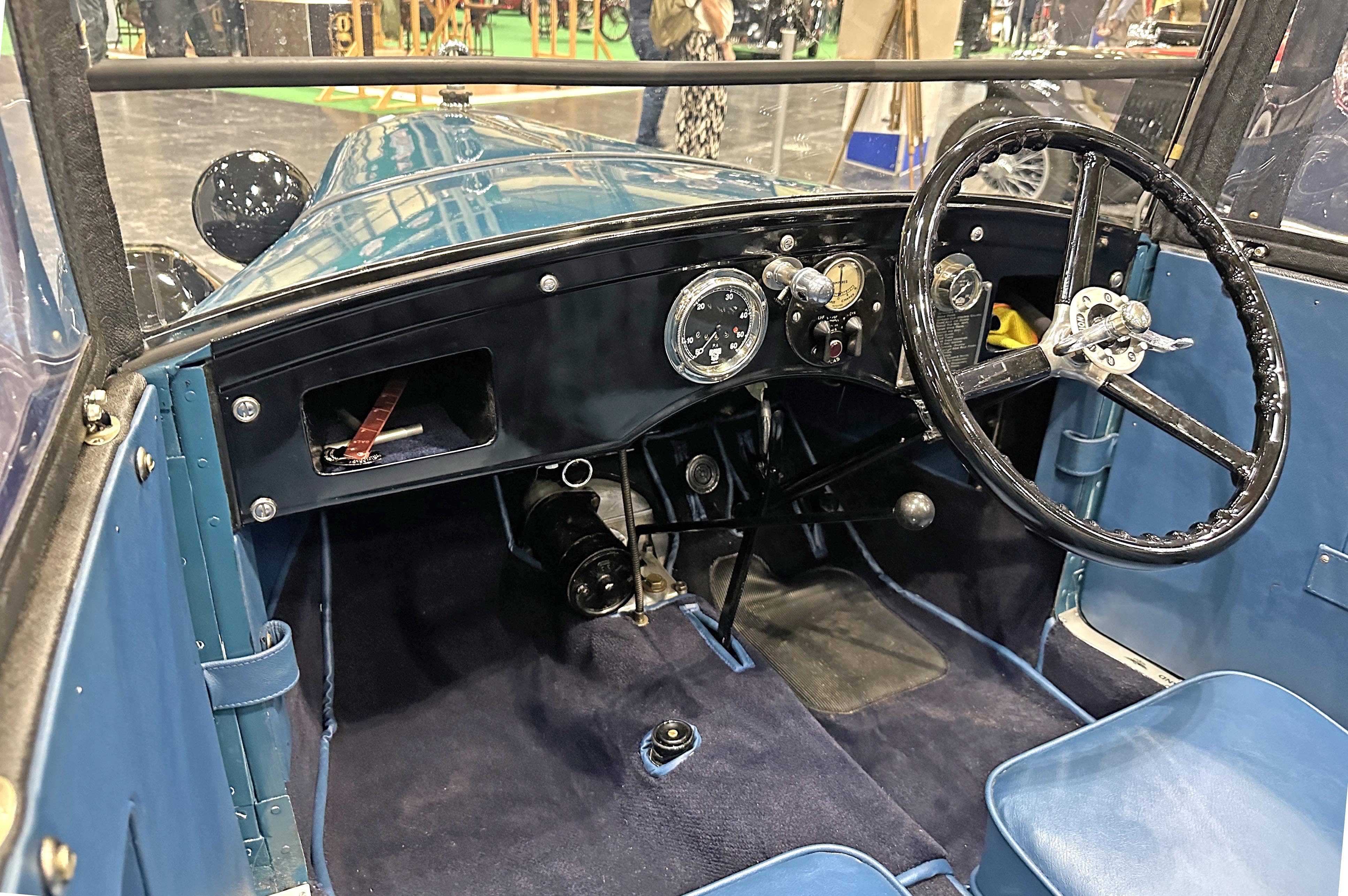
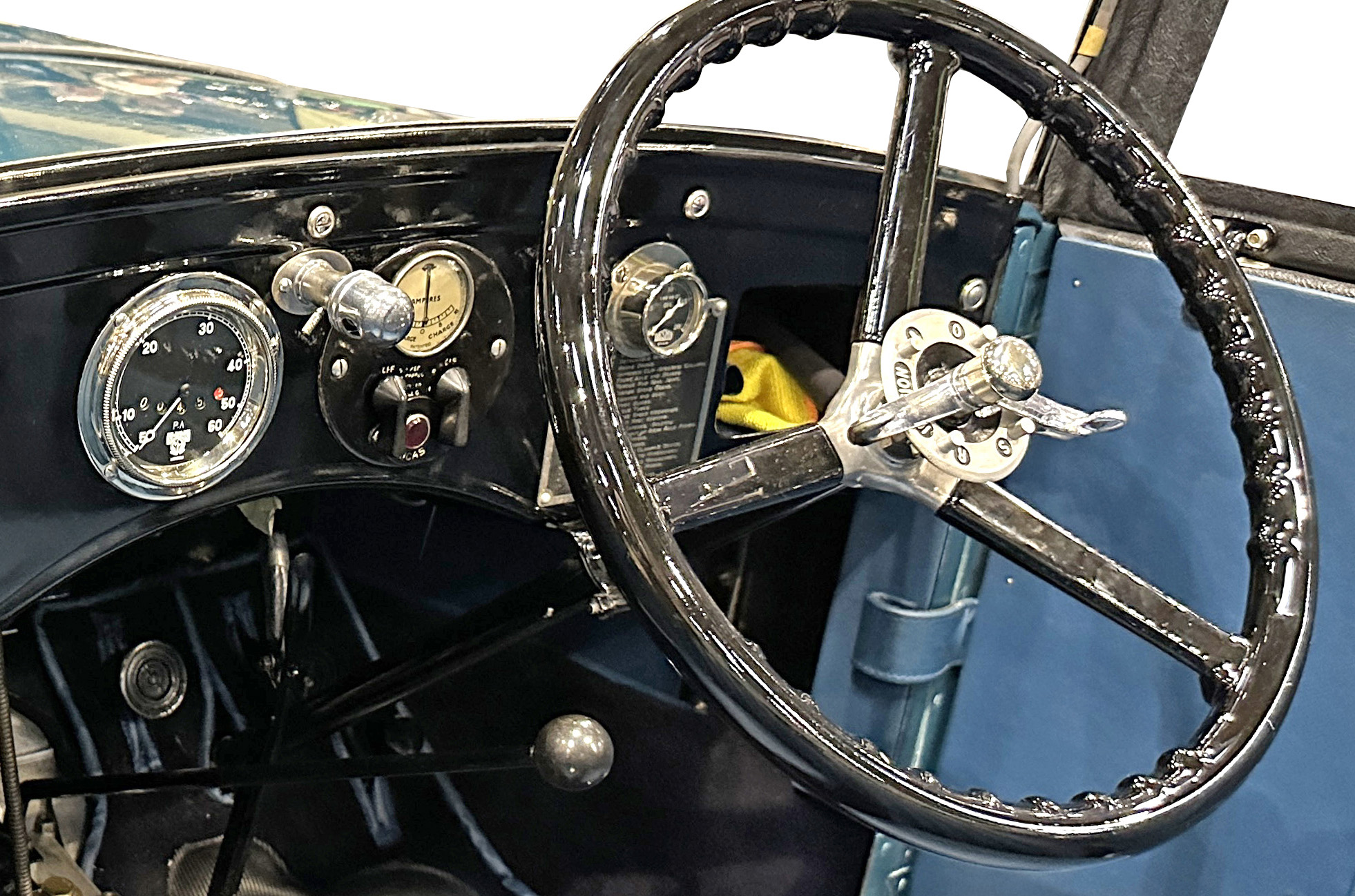
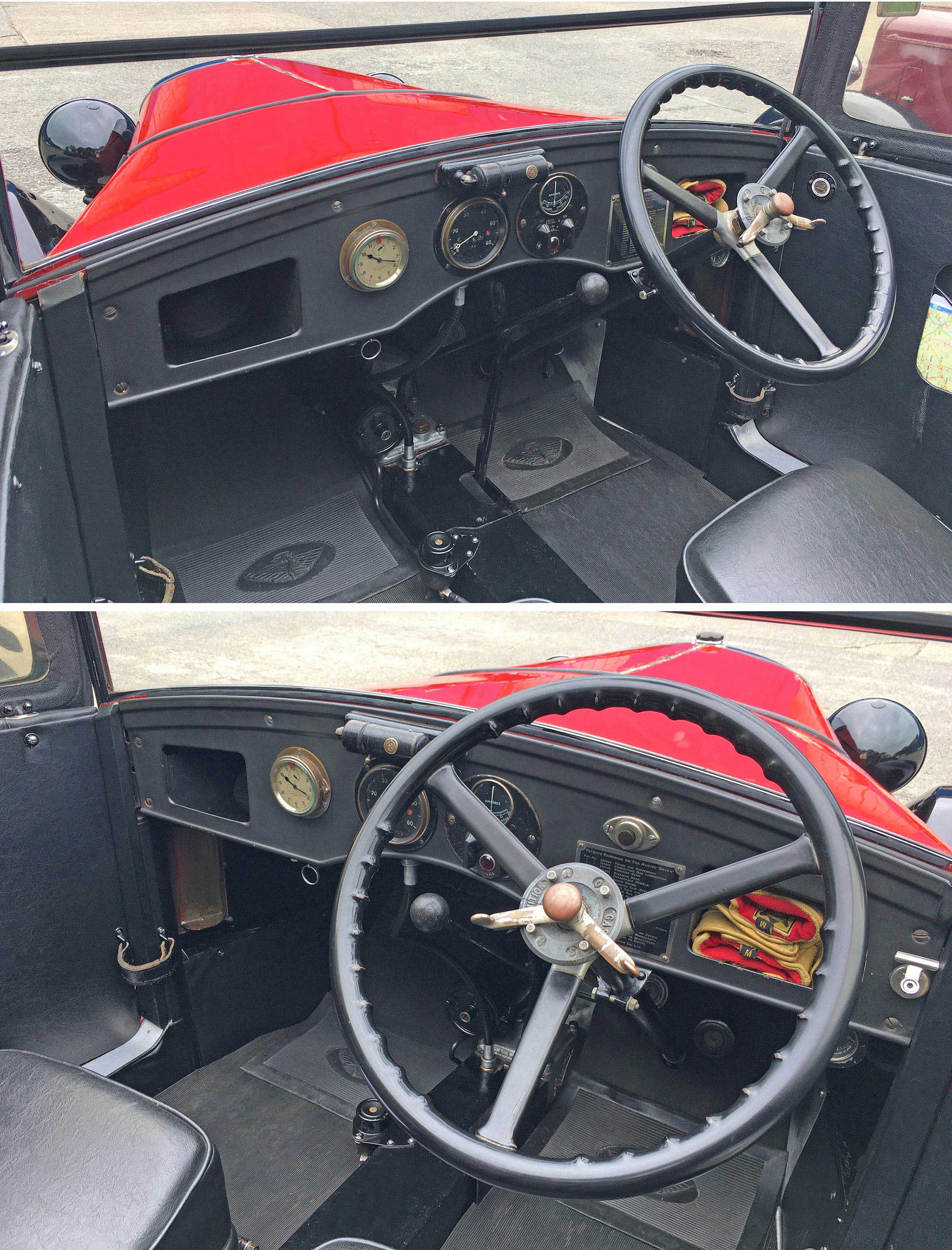
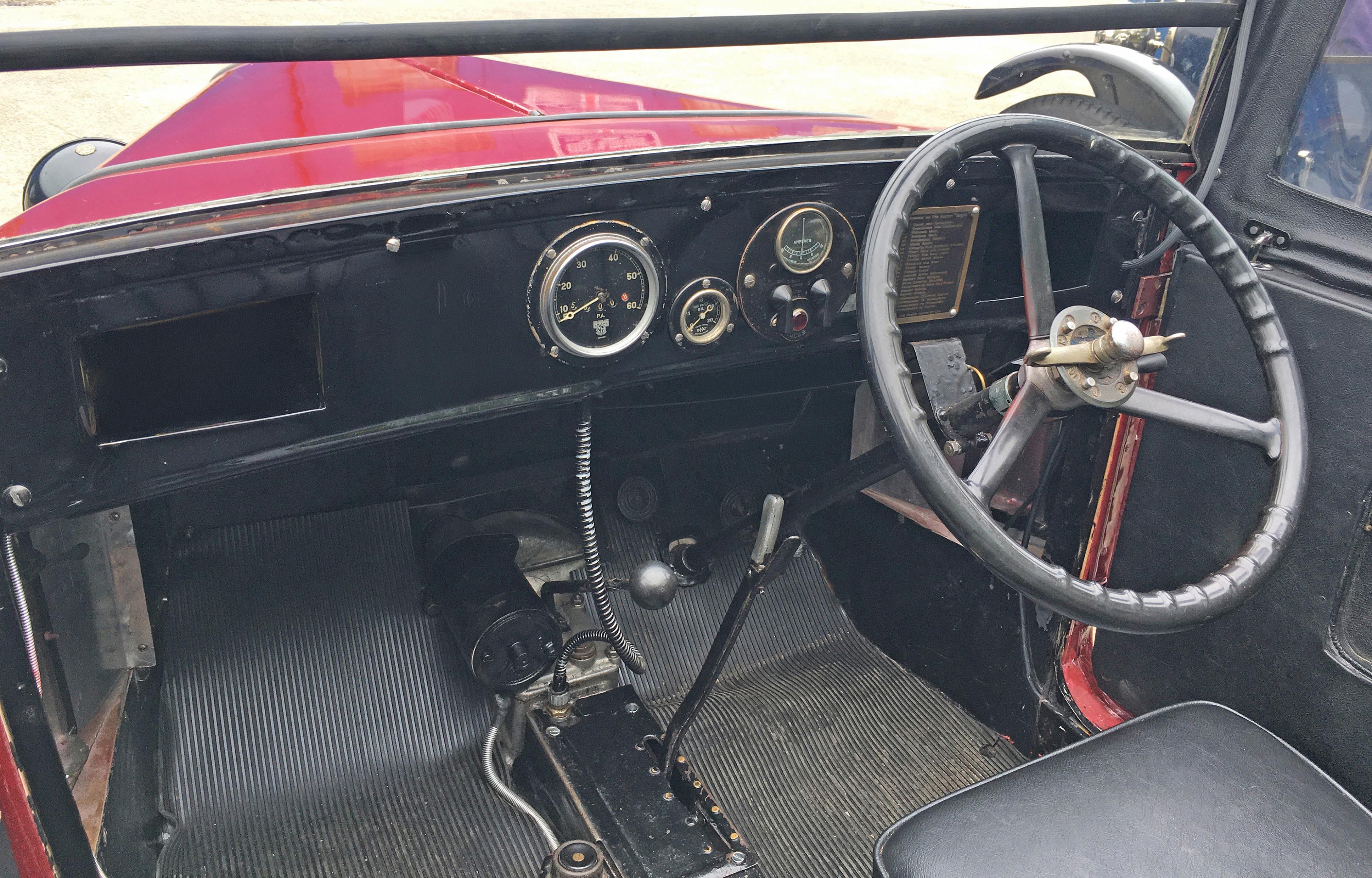
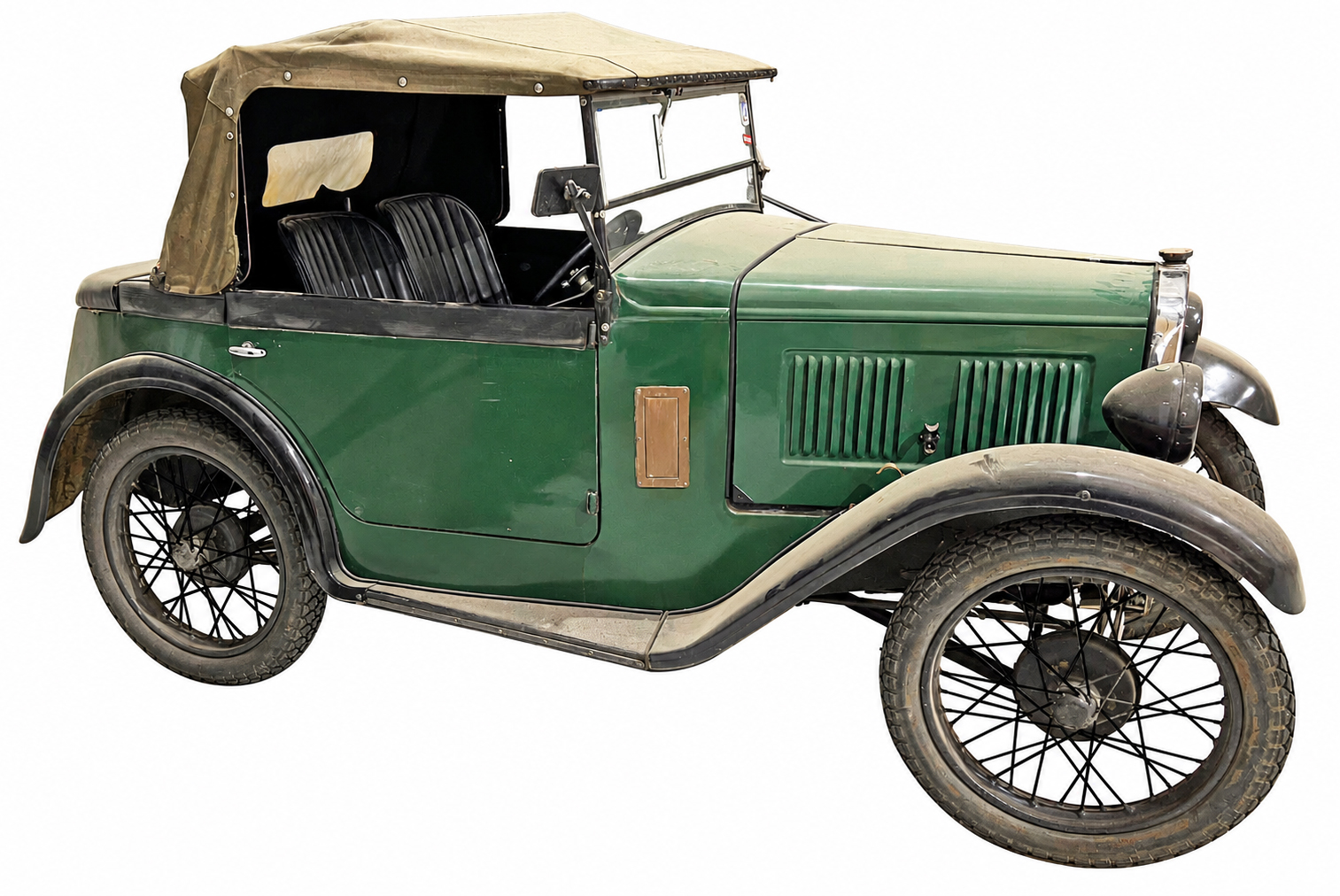
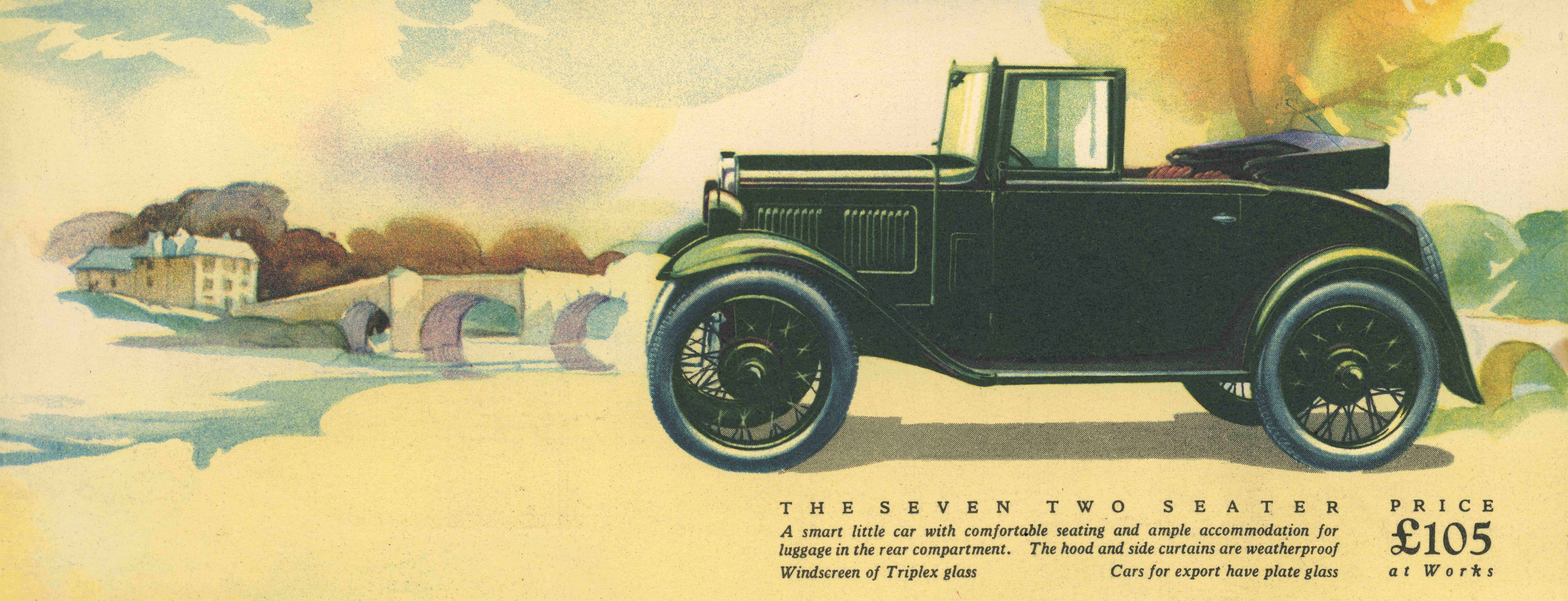
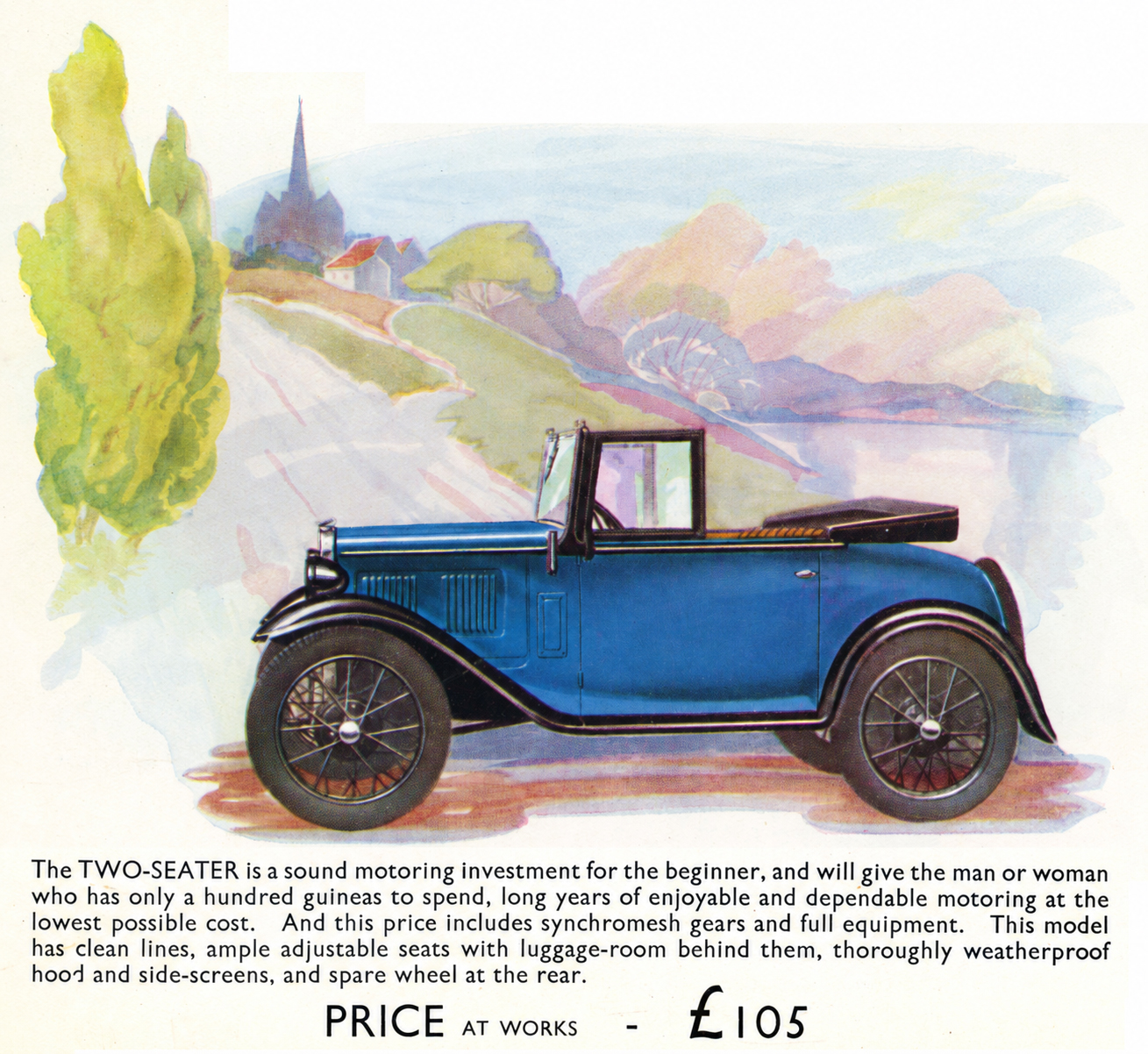
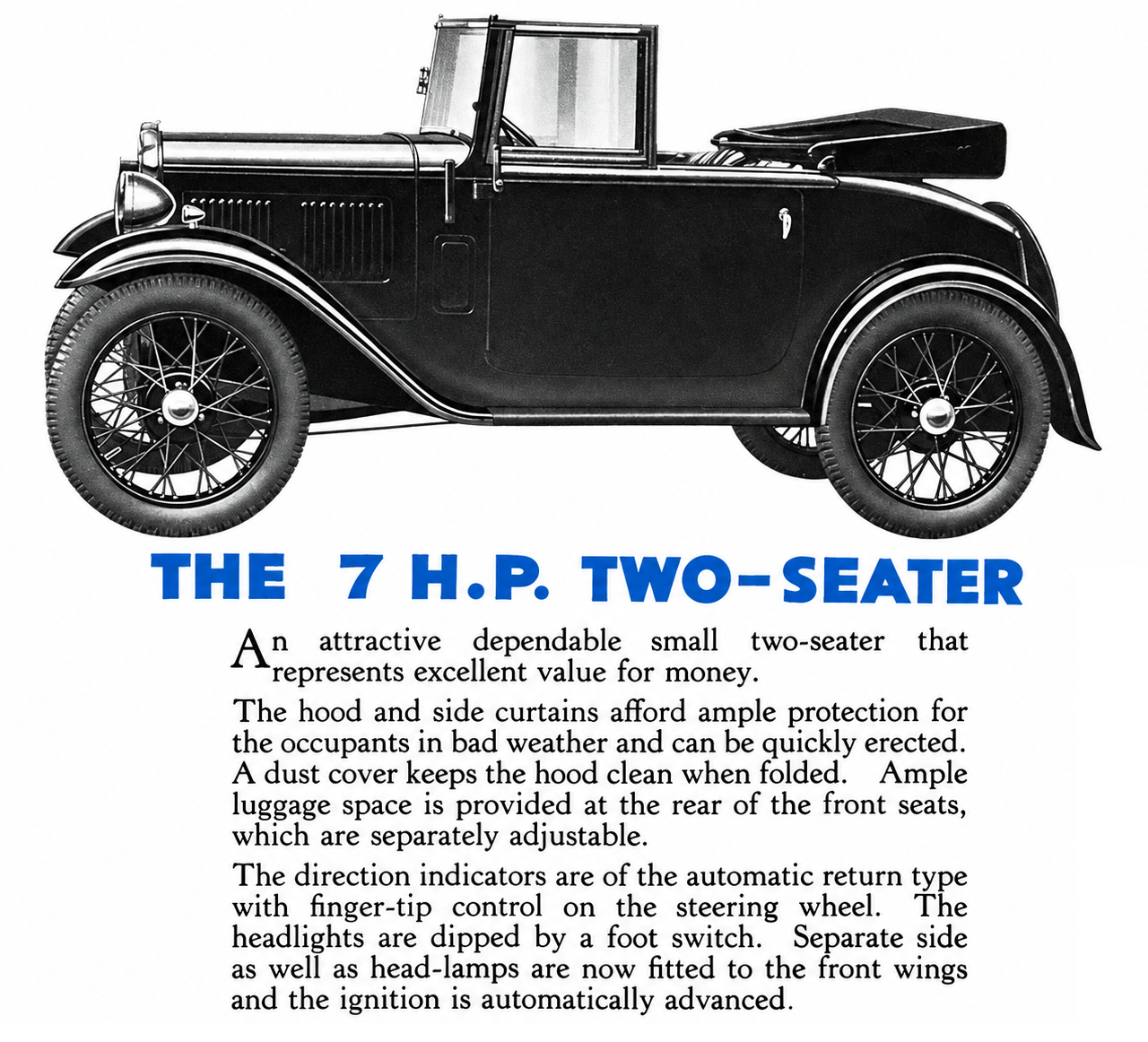
It's believed that only 100 examples of the first Model P were produced, and surviving cars are indeed rare. All four known versions used aluminium bodies, each featuring the same distinctive boat-shaped tail with a horizontally mounted spare wheel. This was, at the time, a popular style and intended to suggest a sporting pedigree; apart from their appearance, however, there was nothing particularly 'sports' about the Boat-tail at all. Their mechanical specification was entirely standard, and their performance no better than that of, for example, a contemporary AE Chummy. The P and PA dashboards were given an attractive fine black crackle finish, while surviving PBs have been found with both crackle and gloss finishes - though time, of course, has allowed owners to repaint them at will.
Several modifications were required to accommodate the lower lines of the P-Series body. These included a more steeply raked steering column, and seats mounted closer to the floor. On the P and PA, the lower dashboard, necessitated by the more inclined steering column, had its bottom edge cut away in the form of a central shallow arc to clear travel of the long, ball-change gear lever introduced in late 1929. From the PB onward, to accommodate the centrally mounted oil-pressure gauge that replaced the oil button, this cut-out was abandoned and, to compensate, the dashboard depth was reduced to 5.25 inches, compared with 7.5 inches on a Chummy of the same year. As a consequence, the steering-column-to-dashboard clamp was a special, much longer one.
Beyond its attractive styling, the P's unique body offered another advantage: a little extra, much-needed legroom. A lack of space was an enduring problem for taller occupants in other short-wheelbase Sevens, a limitation somewhat eased at the end of 1931, when a 6-inch longer wheelbase chassis was introduced - though this was never used on the Boat-tail.
Essentially similar to the P, the PA was distinguished by its wings, which featured a pressed strengthening bead around their edges. Introduced across the Seven range in January 1930, the factory called this change the Type 'G'.
The short-lived PA was replaced by the PB in June 1930, reflecting all the changes introduced at the same time for other models. The main difference was bringing the entire range's styling up to date: the long-used low-height radiator, short bonnet, and long scuttle were abandoned and replaced by a taller, chrome-plated radiator, a long bonnet, and a short scuttle. Another significant change was the adoption of coupled brakes, with the foot pedal (and the handbrake) now working on all four wheels. Finally, another remnant of vintage specification was lost, and a proper oil pressure gauge replaced the frequently leaking oil pressure button. Early examples of the PB can be identified by their plain-sided bonnets, a feature shared by contemporary Saloons but not, as far as can be determined, by Tourers. The much more common louvered bonnet was introduced perhaps two months later, in August.
The final version of the Boat-tail was the PC, which differed only in minor differences in the lengths of its bonnet and scuttle. One way to tell if it's a PB or a PC is the badge on the radiator shell; if it's original to the car, like other models, the badge was detachable until around January 1931, after which it was pressed into the shell itself. Whether PC production ended in late 1931 or, as some sources claim, continued until September 1932 cannot be confirmed. If the former is true, Austin would have been without a non-sporting Two-seater in its range until the introduction of the long-wheelbase and a very different PD, which is covered below.
As the Boat-tail was always a slow-selling, niche model, it has long been suspected that, given the many small details involved in its construction, it was produced in small batches to meet anticipated demand.
If you're unsure which model you have, examine the transmission tunnel just before the detachable handbrake cover, where you'll find the model type stamped.
With the introduction of the 98-inch long-wheelbase chassis in October 1932, the model range didn't change suddenly or completely. The first car to offer a roomier cabin was the best-selling Seven, the Saloon, given the factory code RN. Surprisingly, the short-wheelbase RM Saloon continued until February 1932, and the still vintage-looking AG Tourer and the smart boat-tailed Two-seater, the PC, possibly still being available until September of the same year.
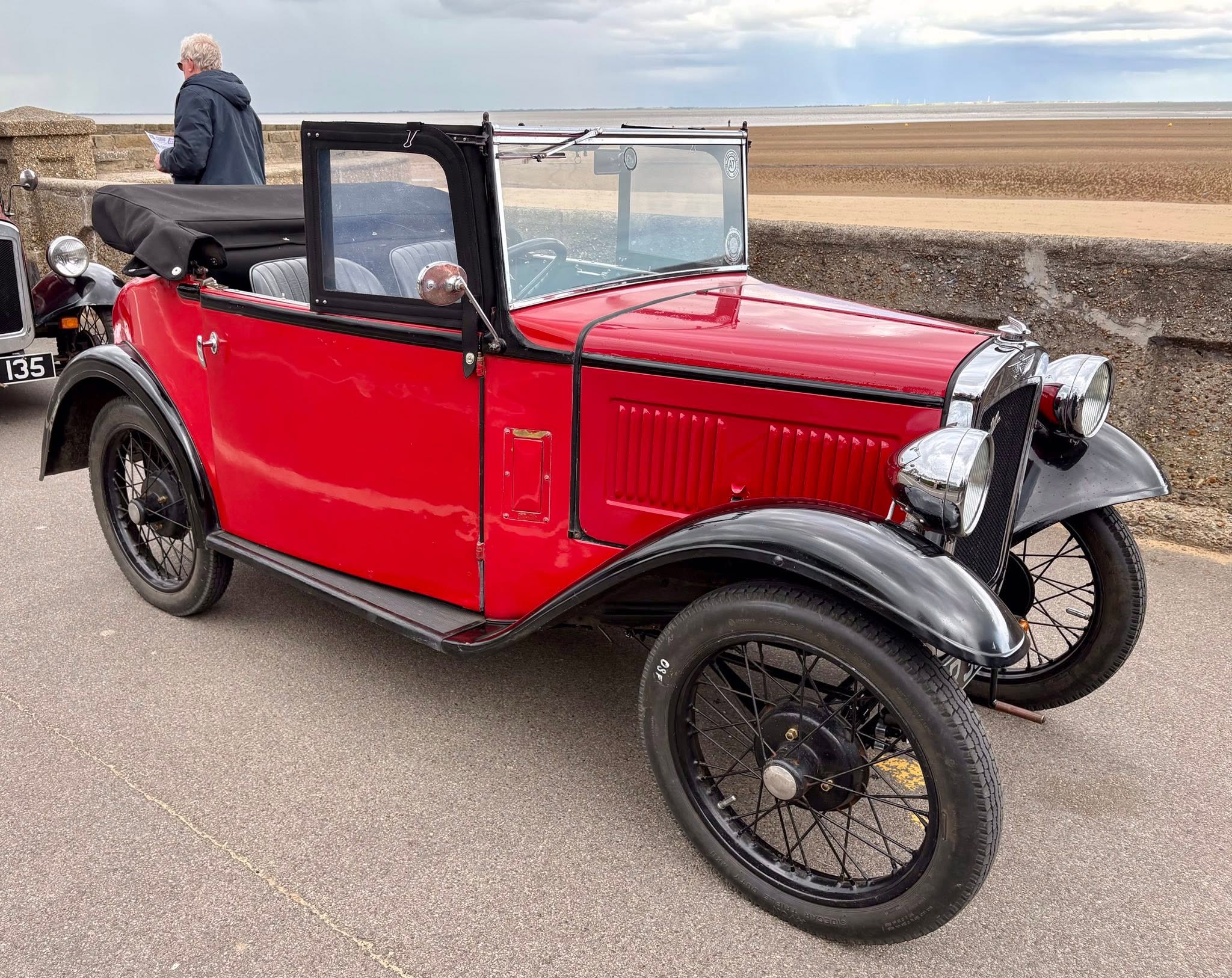
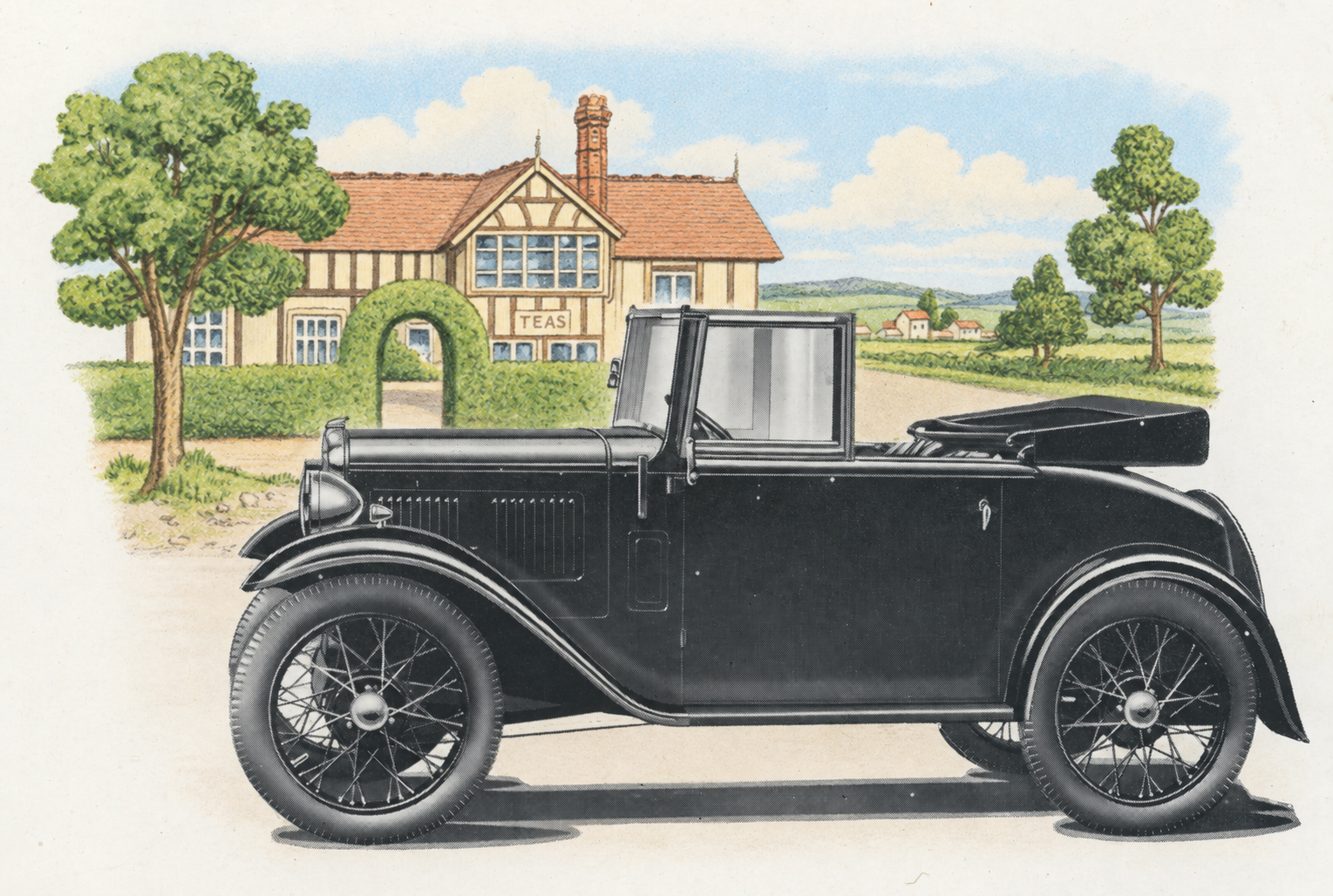
The replacement for the P Series Boat-tail Two-seater was the Type PD, introduced in September 1932. Like other contemporary models in the Seven range, this benefited from the new longer 98-inch wheelbase, a 4-speed gearbox, a rear-mounted petrol tank with an electric fuel gauge, a single-pane windscreen that hinged open from the top, and large, square doors that gave easy access to the seats. The spare wheel was now carried on the back of the body, freeing up a useful amount of luggage space in the tail accessed through a flap behind the seats. The car shown is an early one, identified by the downward-pointing door handles. Production of the PD ended in the middle of 1934 just as, for the 1935 selling season, the Austin Motor Company introduced new versions of the Austin Seven bearing gemstone names: the Ruby Saloon, Pearl Cabriolet and Opal Two-seater. The last model has a surprisingly interesting naming history--or it does if, like me, you enjoy this sort of mind-numbing detail. Here is a small historical nugget that seems to have lain unnoticed in the catalogues until Mike Costigan unearthed it after many hours of diligent research.
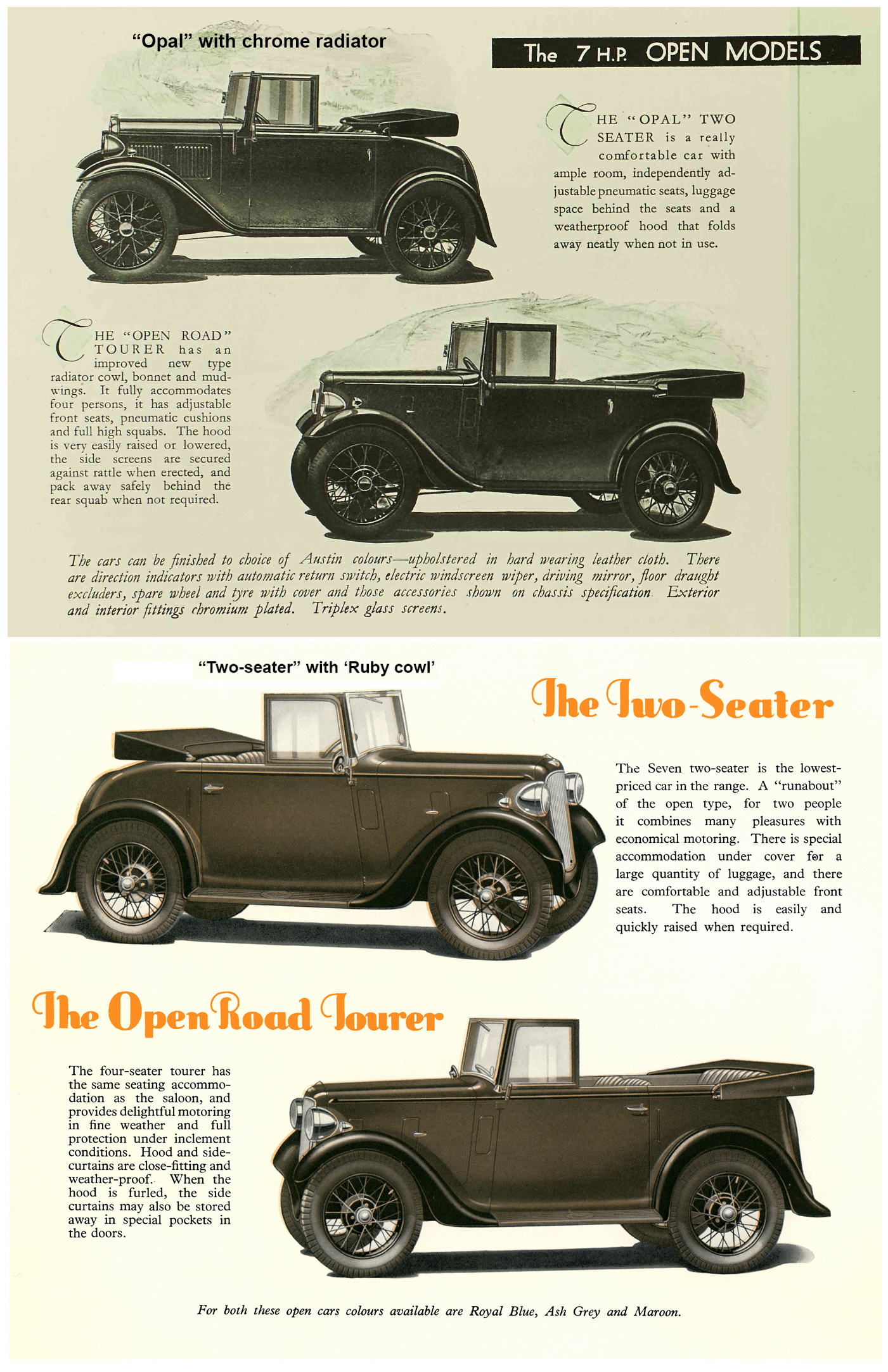
The Ruby and Pearl sat on the new low-frame chassis and had rather radial, up-to-date styling, but as an economy model, the now-renamed Opal was entirely unchanged - apart from its changed cataloged name of Opal and (following other models, a new three-letter code listing it as the Type APD. It was not to become clothed in the more modern style of bodywork until July 1935, the car having the same tail but what was, in effect, a Ruby front end. For decades, to reflect this change, Austin Seven owners referred to this version of the Two-eater as the "Opal", its name fitting neatly alongside the contemporary Ruby and Pearl in the "Jewel" range. Strictly speaking the sales catalogues tell a different story. Those issued in late 1934 and early 1935 do use "Opal" for the chrome-radiator Two-seater, yet when the new version on the low chassis, with a Ruby radiator cowl, appeared in July 1935, the catalogues dropped "Opal" and reverted to the plain and prosaic "Two-seater", giving it the Model Type APE. You can confirm this for yourself, given a spare hour and a strong constitution, by browsing the Austin Seven Clubs' Association brochure archive.
Whether an "Opal" is officially an Opal or merely a bread-and-butter Two-seater therefore depends very much on when it was made. Why Austin bestowed a gemstone name on one version and withdrew it from its successor remains a mystery (perhaps somebody in the naming department had exhausted their jewellery allowance). In everyday use, though, calling the 'Ruby-style' Two-seater an Opal is perfectly sensible, even if the catalogues disagree.
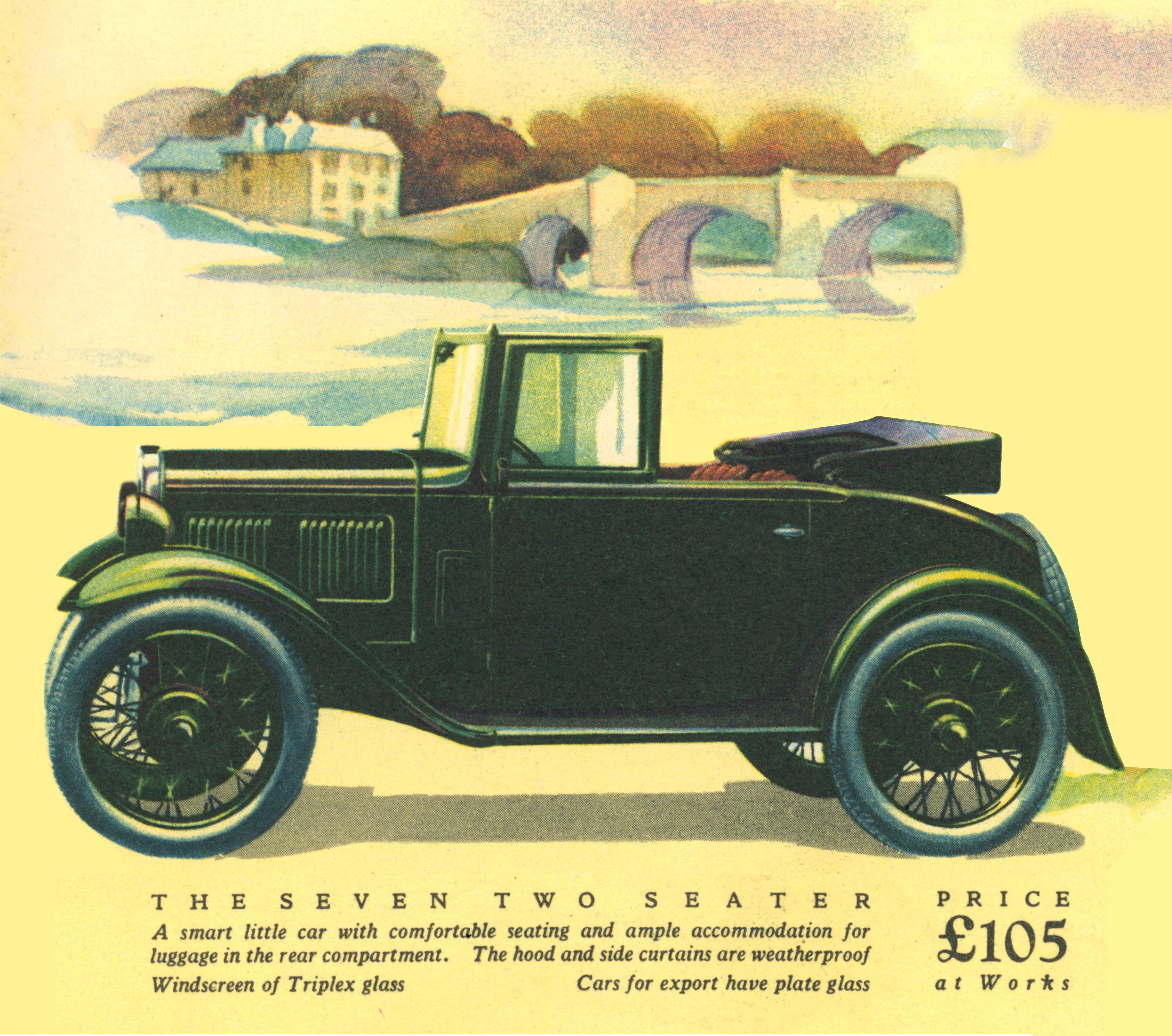
You'll find two advertisements amongst the pictures below that illustrate the naming puzzle. In the first, issued in 1935, the chrome-radiator Two-seater is listed as an "Opal", while the four-seater "Open Road" alongside it already wears a Ruby-style radiator cowl. In the second, issued in late 1936 or early 1937, the cowled car appears under the prosaic title "Two-seater". The car had gained a modern, imposing nose but lost its precious gem. The last APEs were built at the end of 1938, or perhaps into early 1939.
Much as we all love the cute little Chummy and the delicate, contemporary saloons, the "Opal", especially when fitted in June 1936 with the smoother-running three-bearing engine, is one of the more appealing models for comfortable motoring à deux. It's the lightest car in the Seven range and, in its final form with rod-operated Girling brakes and the ability to store the sidecreens neatly and safely inside the doors, particularly appealing. I've always fancied one.
Read the Light Car & Cyclecar review of a 1930 Boat-tail at the bottom of this page
|
|