|
Reading between the lines of a vintage road test
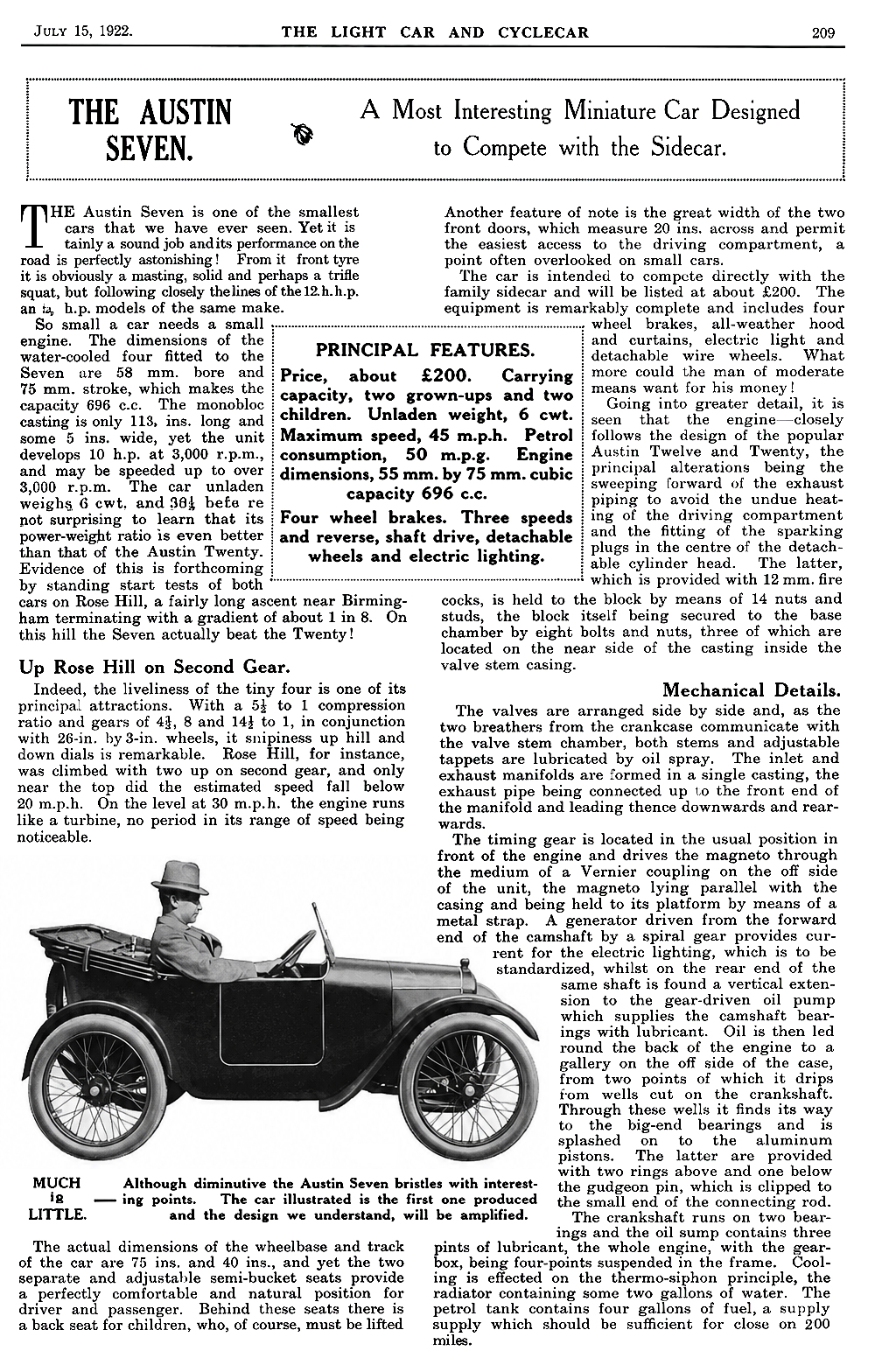
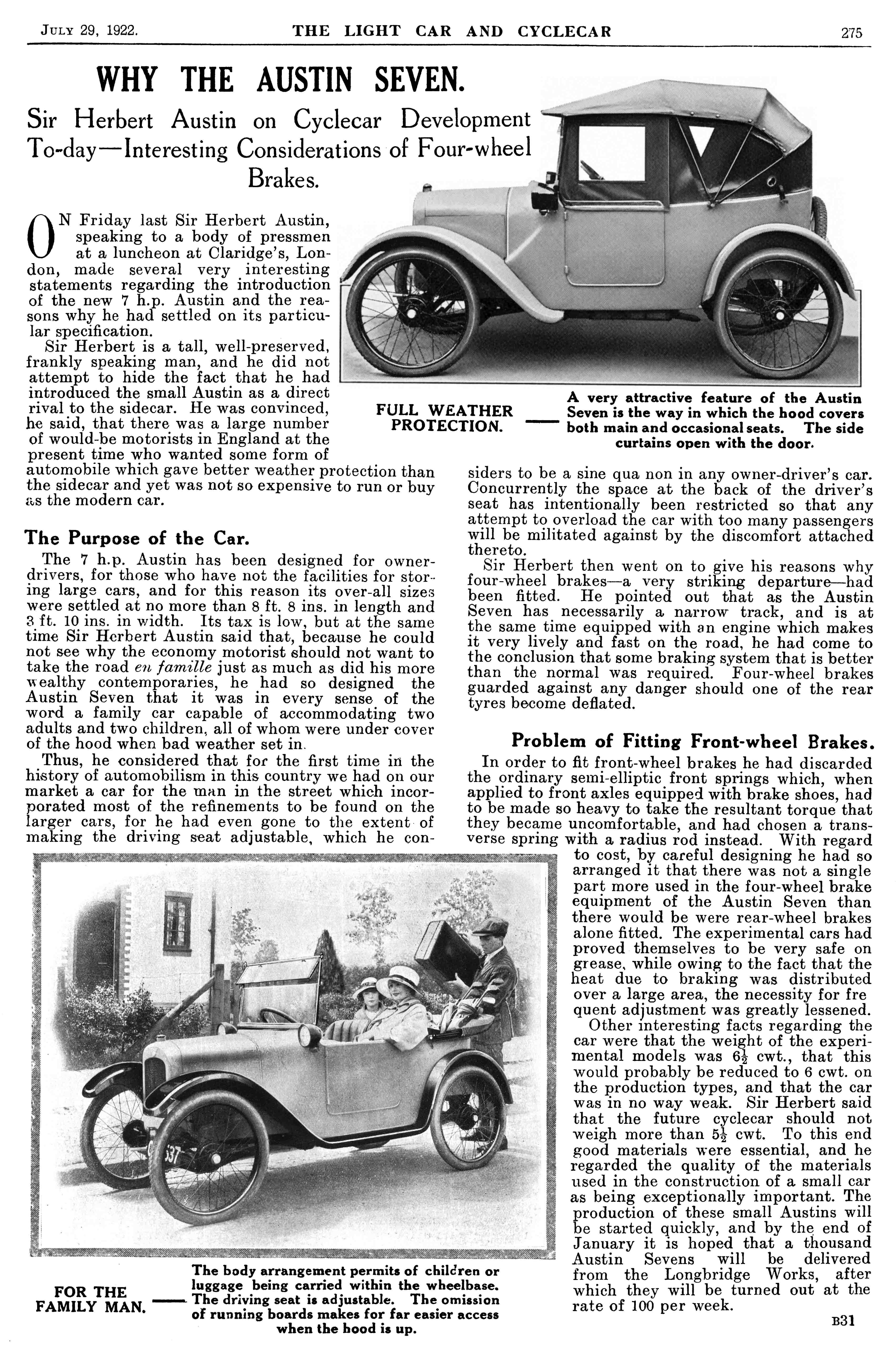
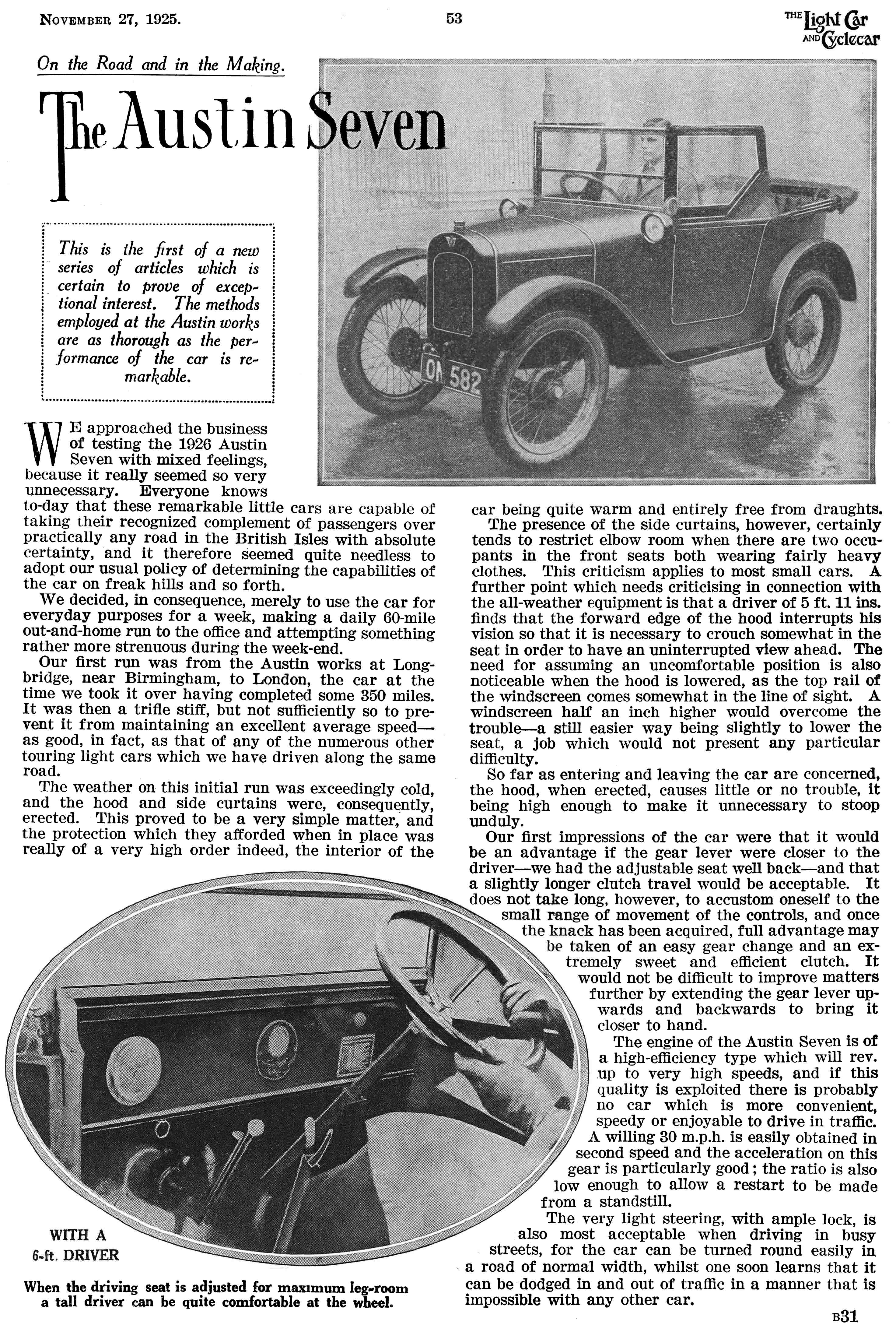
Magazine road tests of the 1920s often combine useful, practical observations, though they clearly show an over-cautious courtesy toward the manufacturer that contrasts sharply with today's reviews. Taking as examples the very early reports from The Light Car and Cyclecar and Motor published between 1922 and 1928, genuine criticism does appear, but it is couched in a quiet, gentle syntax and seldom lacks following, reassuring lines that readers could, of course, read between.
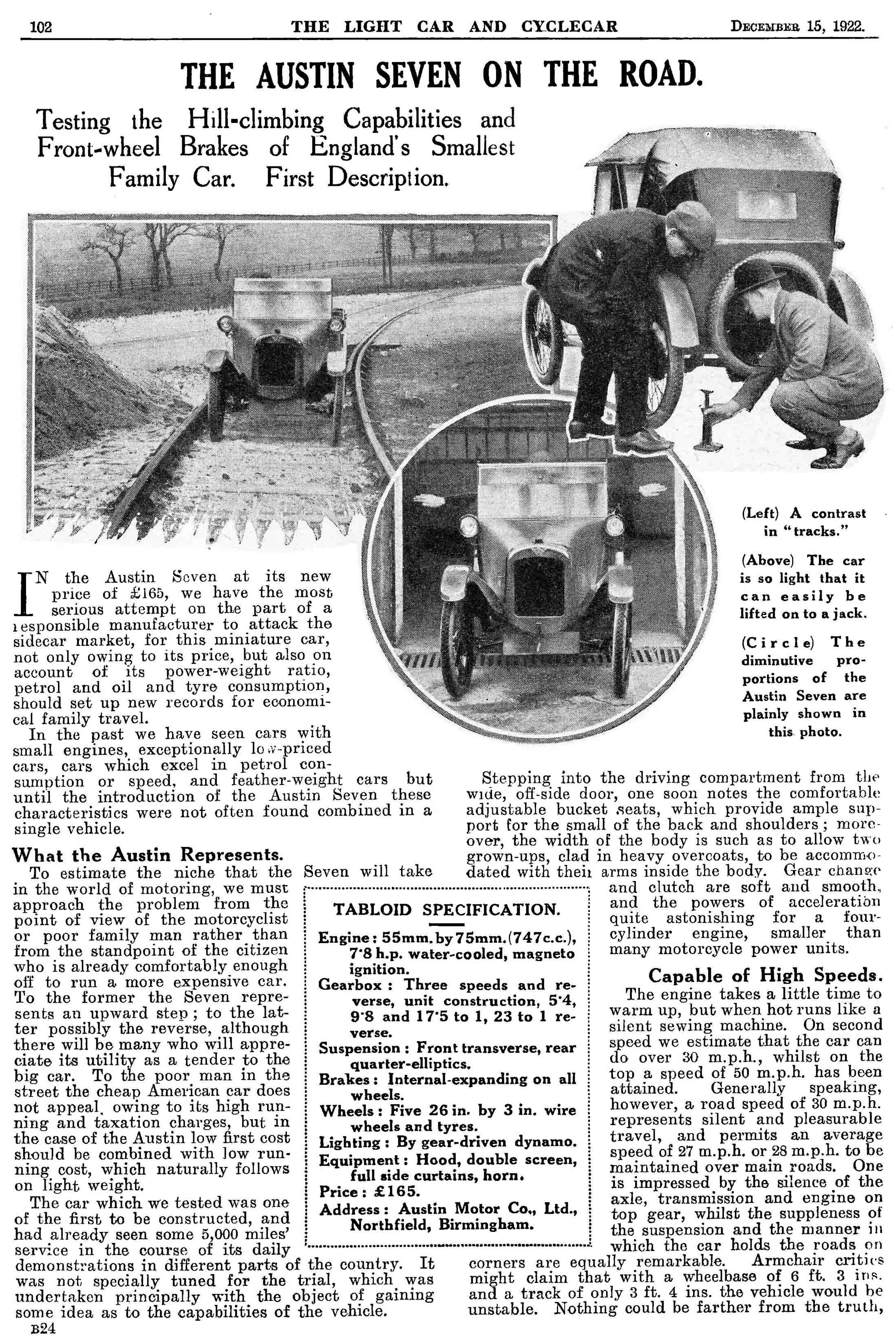
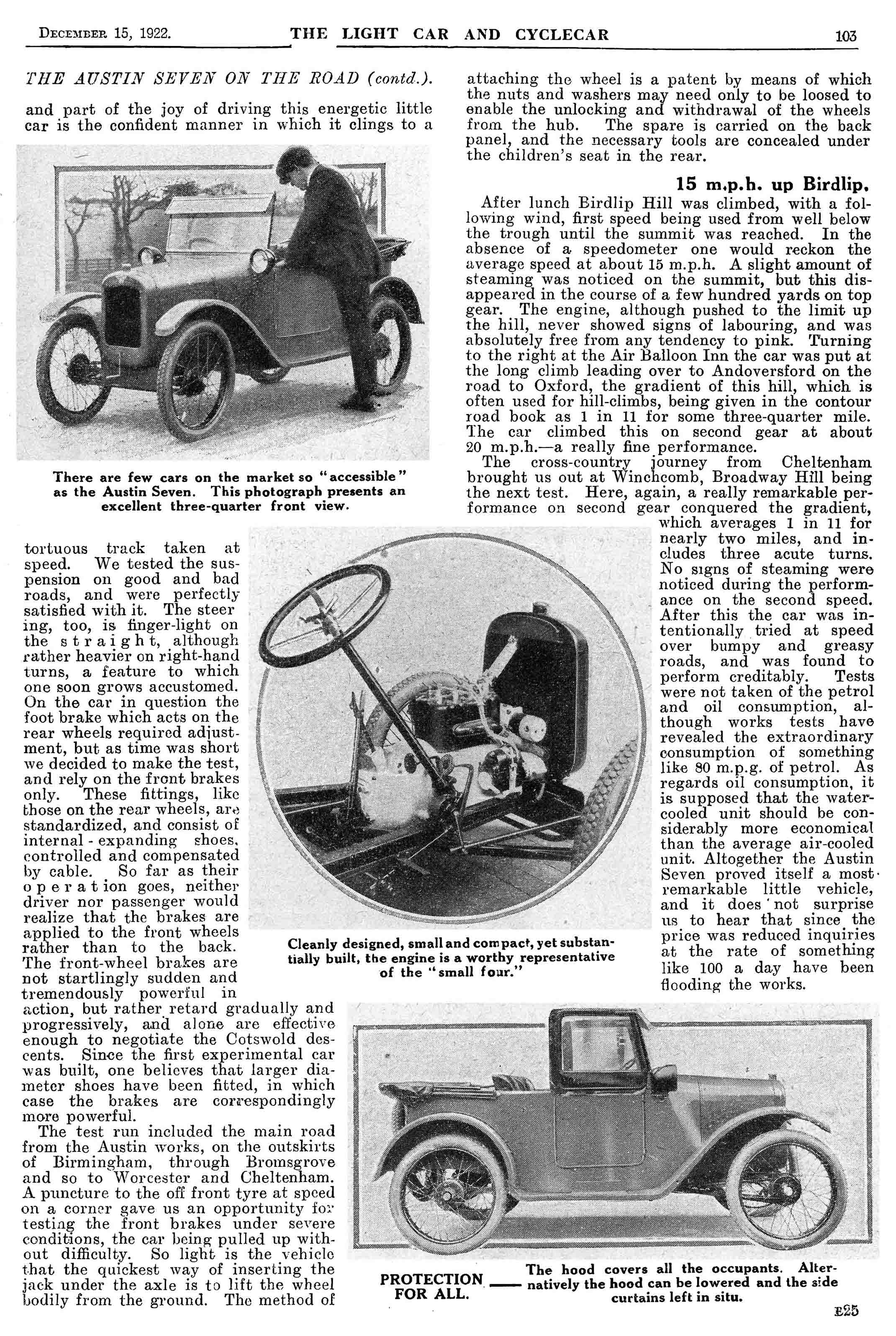
In December 1922, for example, the Seven's steering was described as "rather heavier on right-hand turns", immediately softened by "a feature to which one soon grows accustomed". The fault was admitted, but the remedy was, apparently, familiarity, i.e. ignore it. The front brakes were "not startlingly sudden and tremendously powerful in action", but instead retarded "gradually and progressively". This was followed by reassurance that they were effective enough for Cotswold descents. Significantly, the rear brakes needed adjustment, and the testers explained that, with time short, they had chosen to rely on the fronts alone.
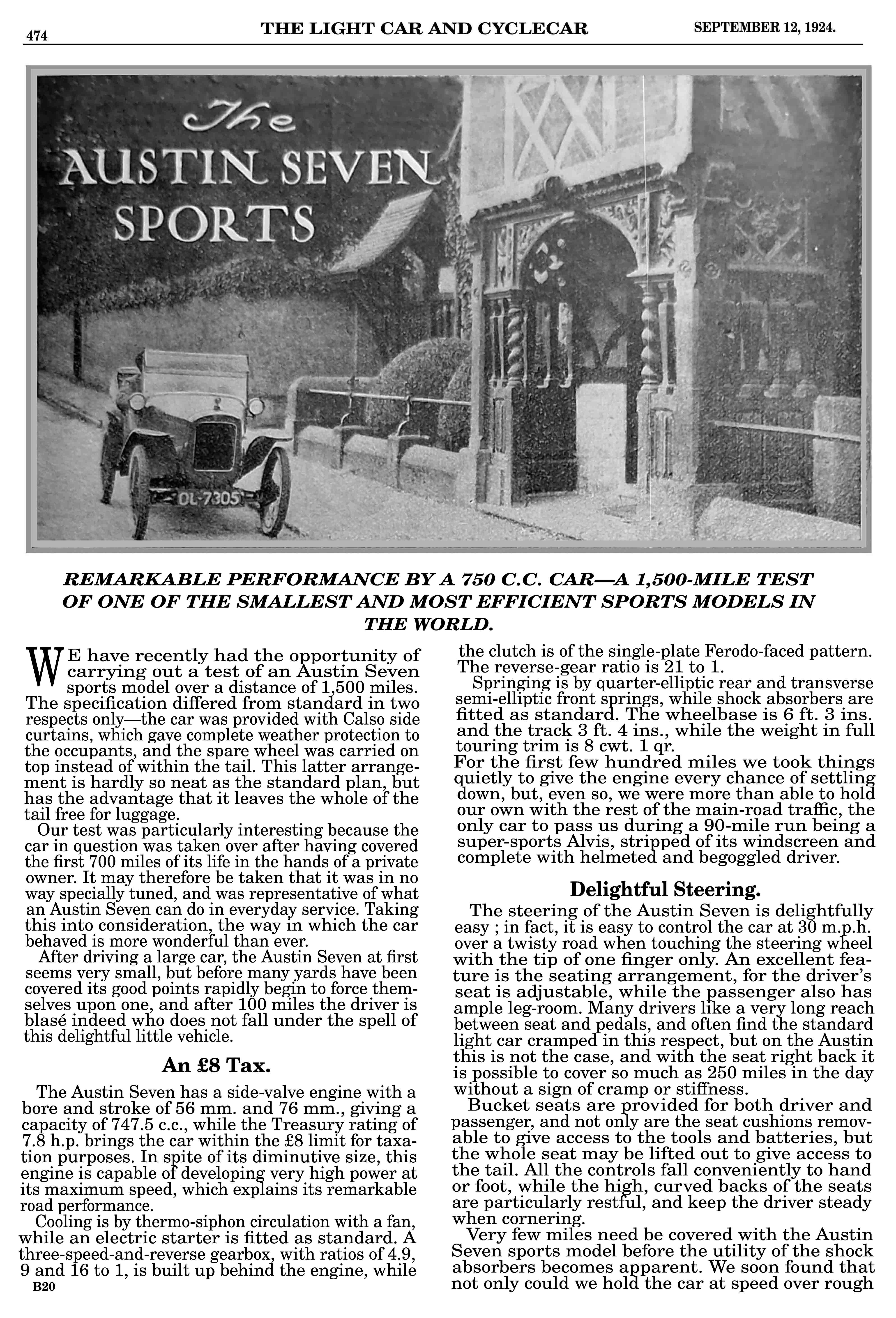
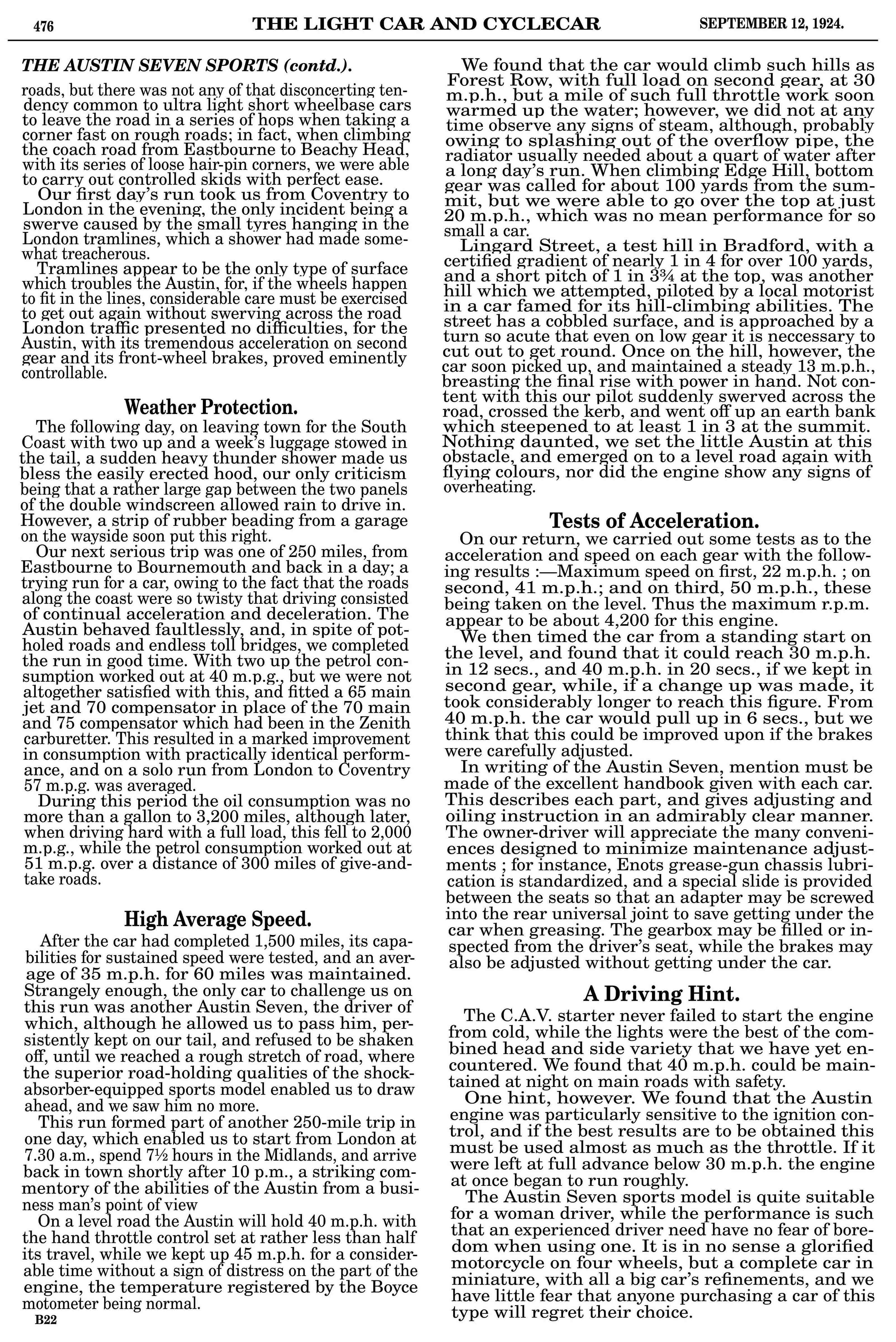
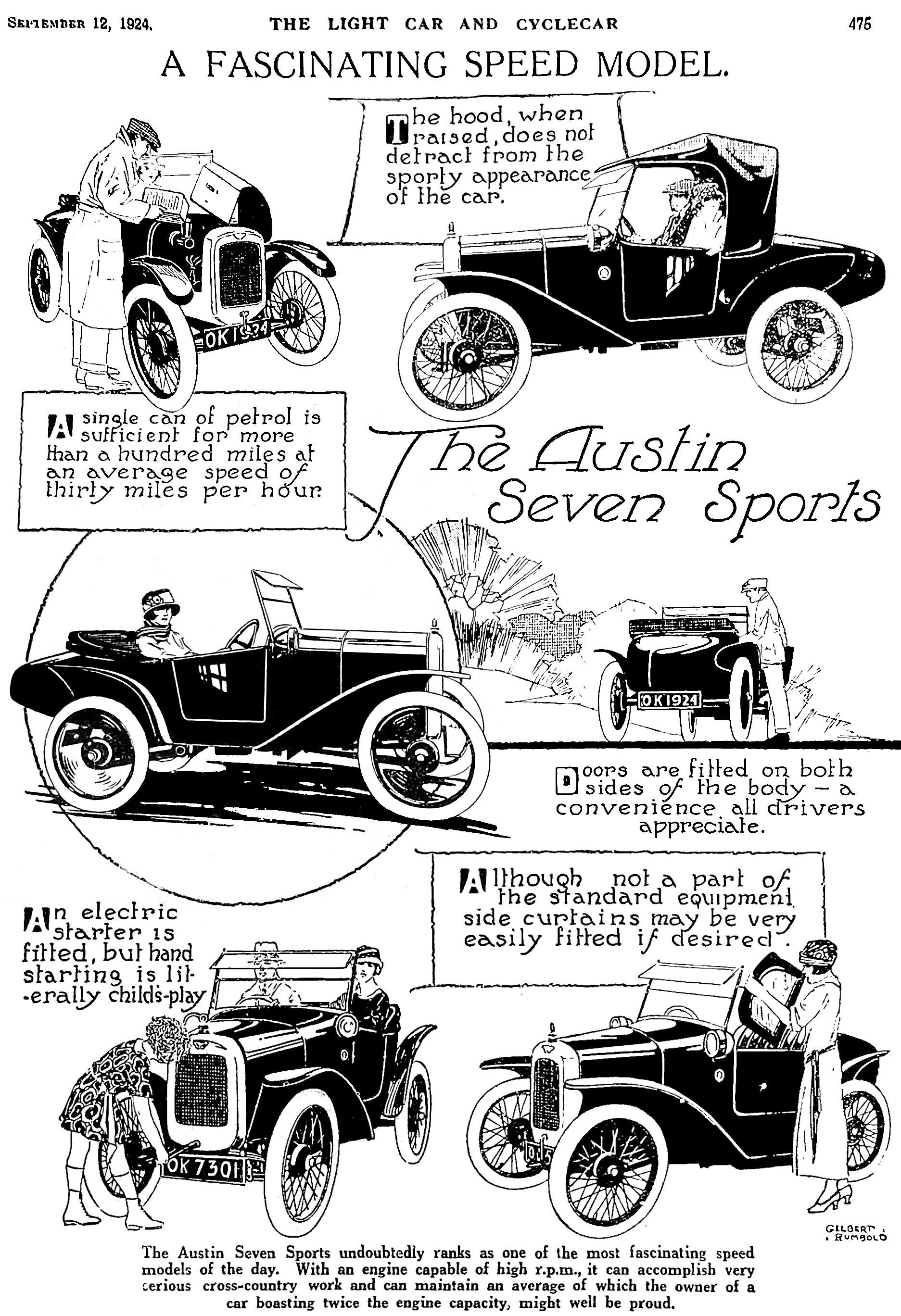
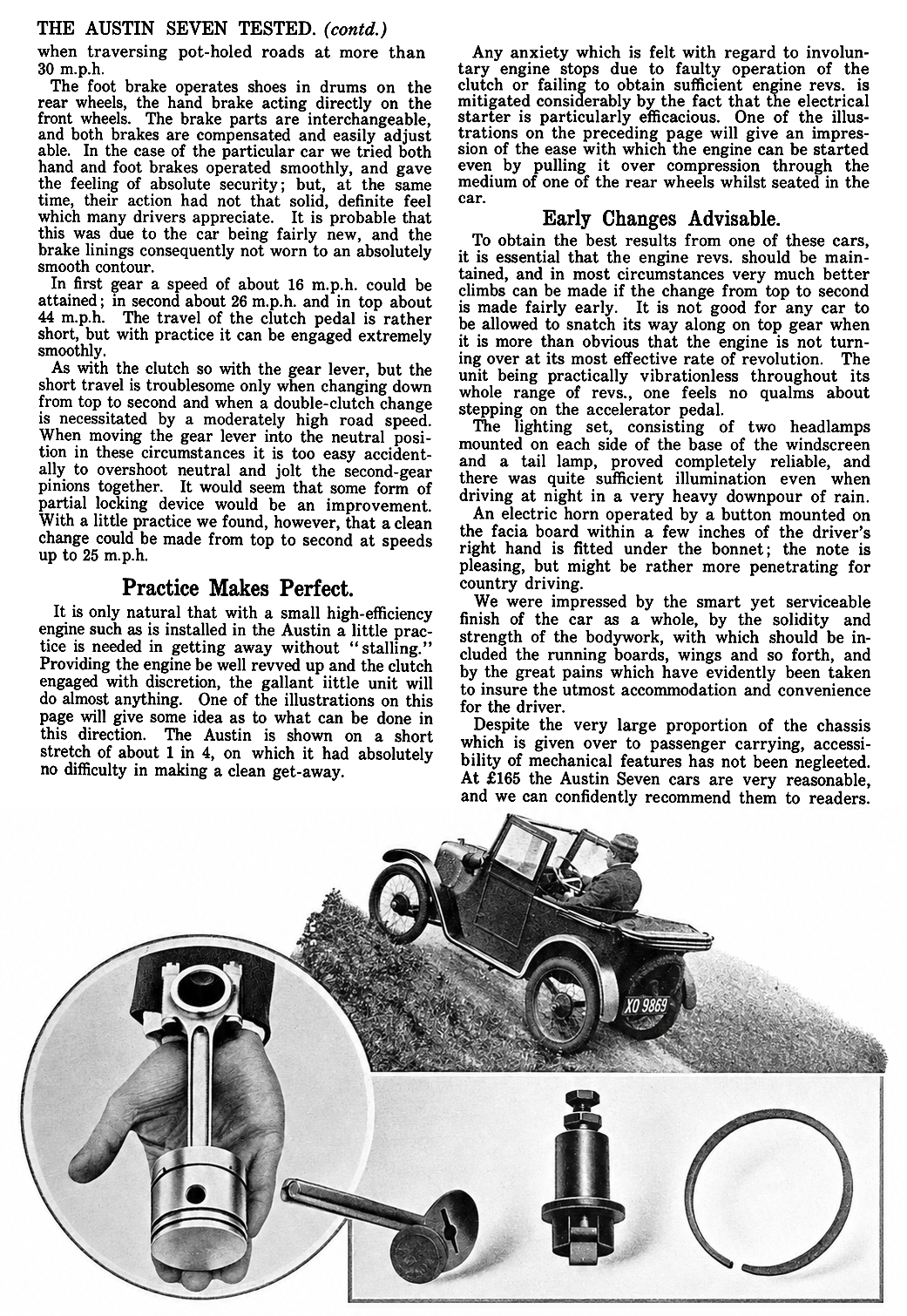
The September 1924 50 m.p.h. sports-model test employed a similar technique. A gap between the windscreen panels let rain drive in, but a strip of rubber beading from a wayside garage "soon put this right". A six-second stop from 40 mph was recorded, accompanied by the suggestion that the result could be improved if the brakes were carefully adjusted. Although neither problem was concealed, each was mollified, its sting substantially reduced.
By December 1928, the diplomacy extended to equipment. "Nothing is lacking except an interior light," the reviewer wrote, then acknowledged that its absence was often felt and confidently expected that most purchasers would add one. The rear window was "very large and well placed", although it "could do with a blind" to prevent following headlights being reflected into the driver's eyes. The purchaser was evidently permitted a modest role in completing the specification.
Especially revealing is how the writer addressed earlier shortcomings when a newer model appeared. The 1928 report admitted that some previous Sevens suffered fore-and-aft pitching sufficiently intrusive to reduce average speeds appreciably--but introduced this observation while explaining that the latest car had overcome it. Obviously yesterday's rather concerning failing could now be discussed more freely once it became today's improvement.
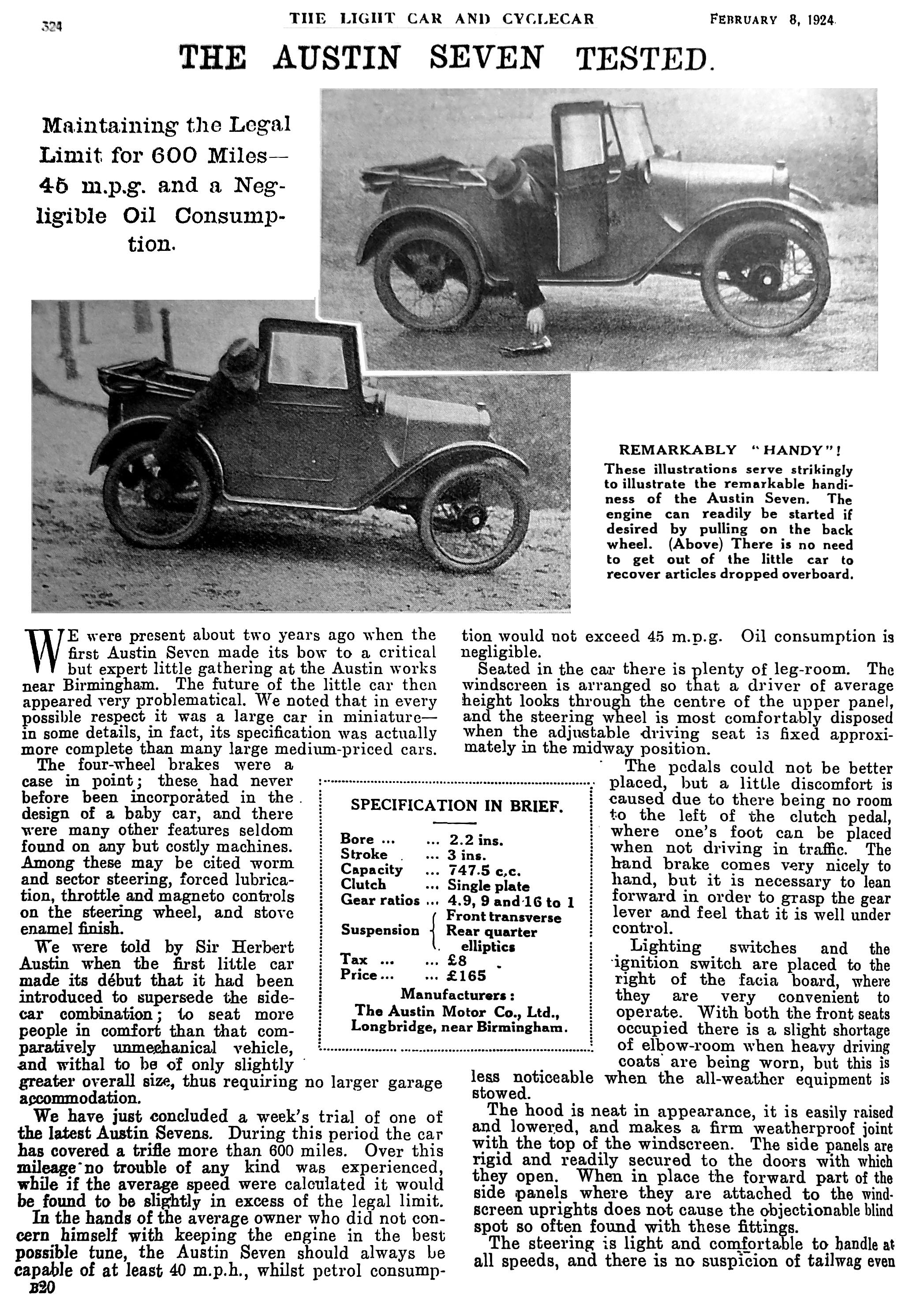
Nevertheless, it would be unfair to dismiss these articles as mere advertising copy. The 1924 test covered 1,500 miles and included timed acceleration, braking and fuel-consumption results. The 1922 report made clear the difference between the maker's claims about speed and consumption and its own measured observations. This report contained concrete evidence, along with a degree of genuine enthusiasm for the car.
While these reports had a sympathetic reviewing style: they did acknowledged faults, offered explanations, suggested remedies, and then quickly restored praise. The performance figures and specifications reported deserved attention but so, very often, did the word "but".
|
|