|
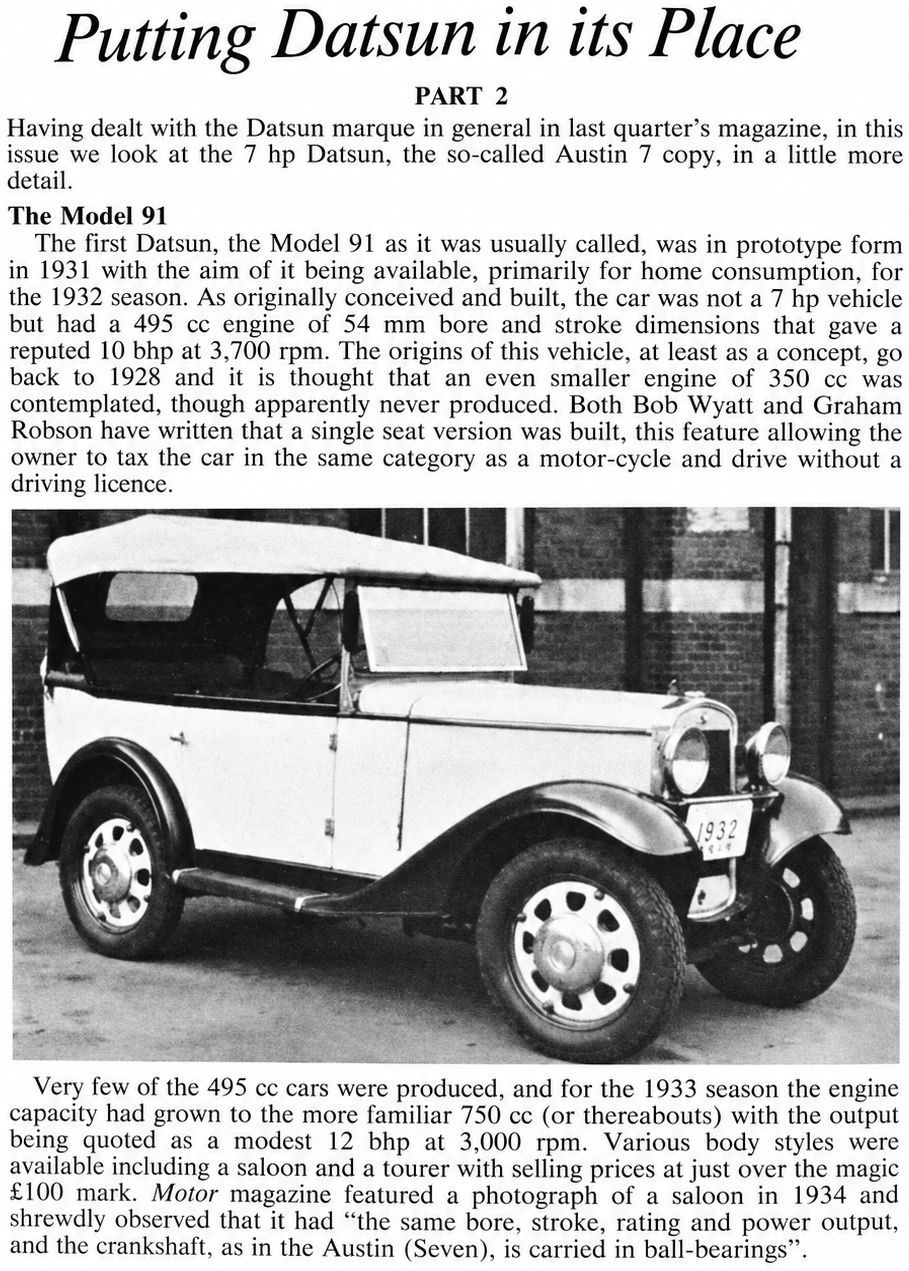
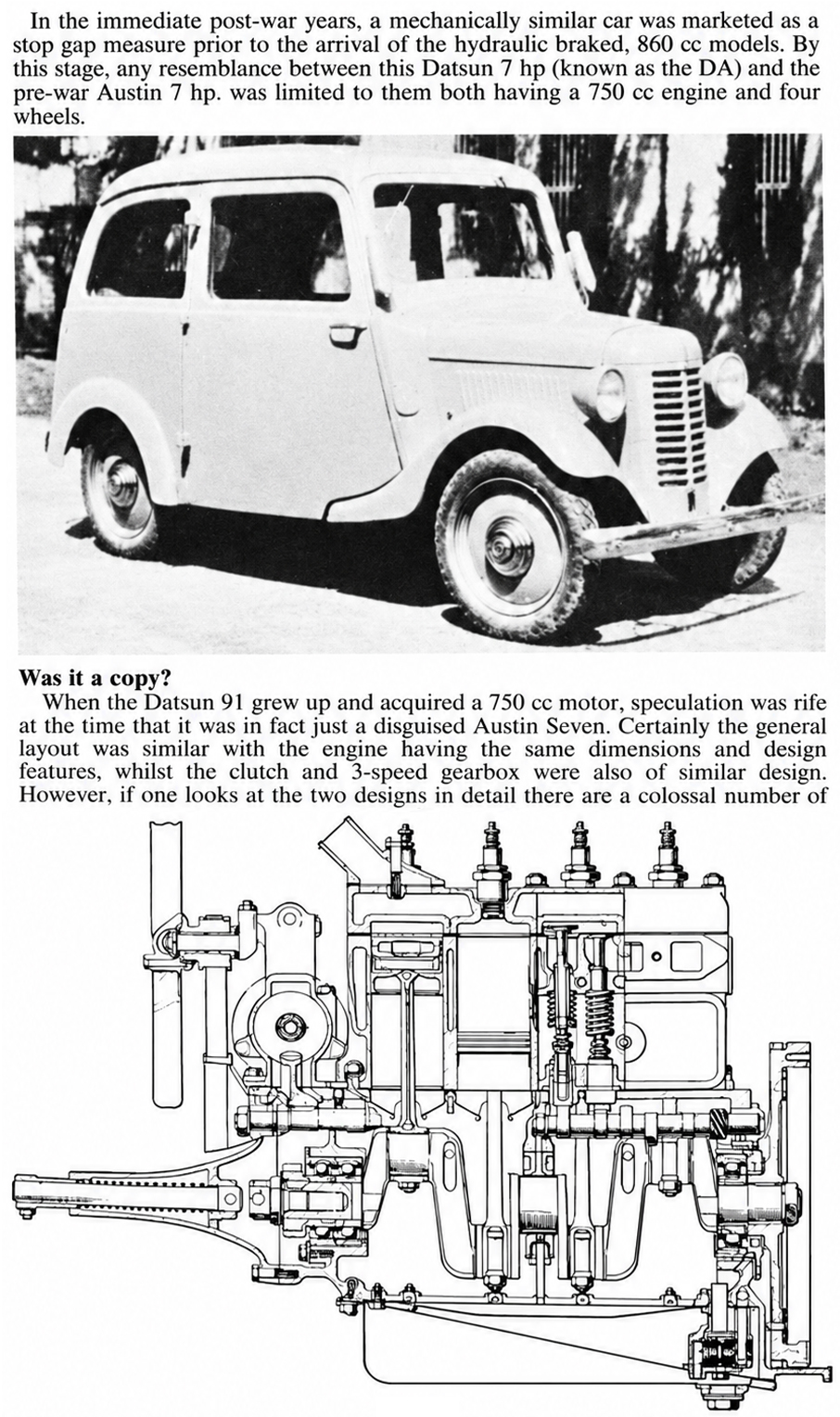
Although it is easy to see why people claim Nissan's pre-war Datsuns were copied or licence-built Austin Sevens, research shows that claim doesn't stand up to scrutiny. There was a genuine Japanese connection with the Seven, and a later manufacturing agreement between Nissan and Austin, but they were from different eras and involved different cars. Over the years, the stories have become entangled into one rather convenient but incorrect one.
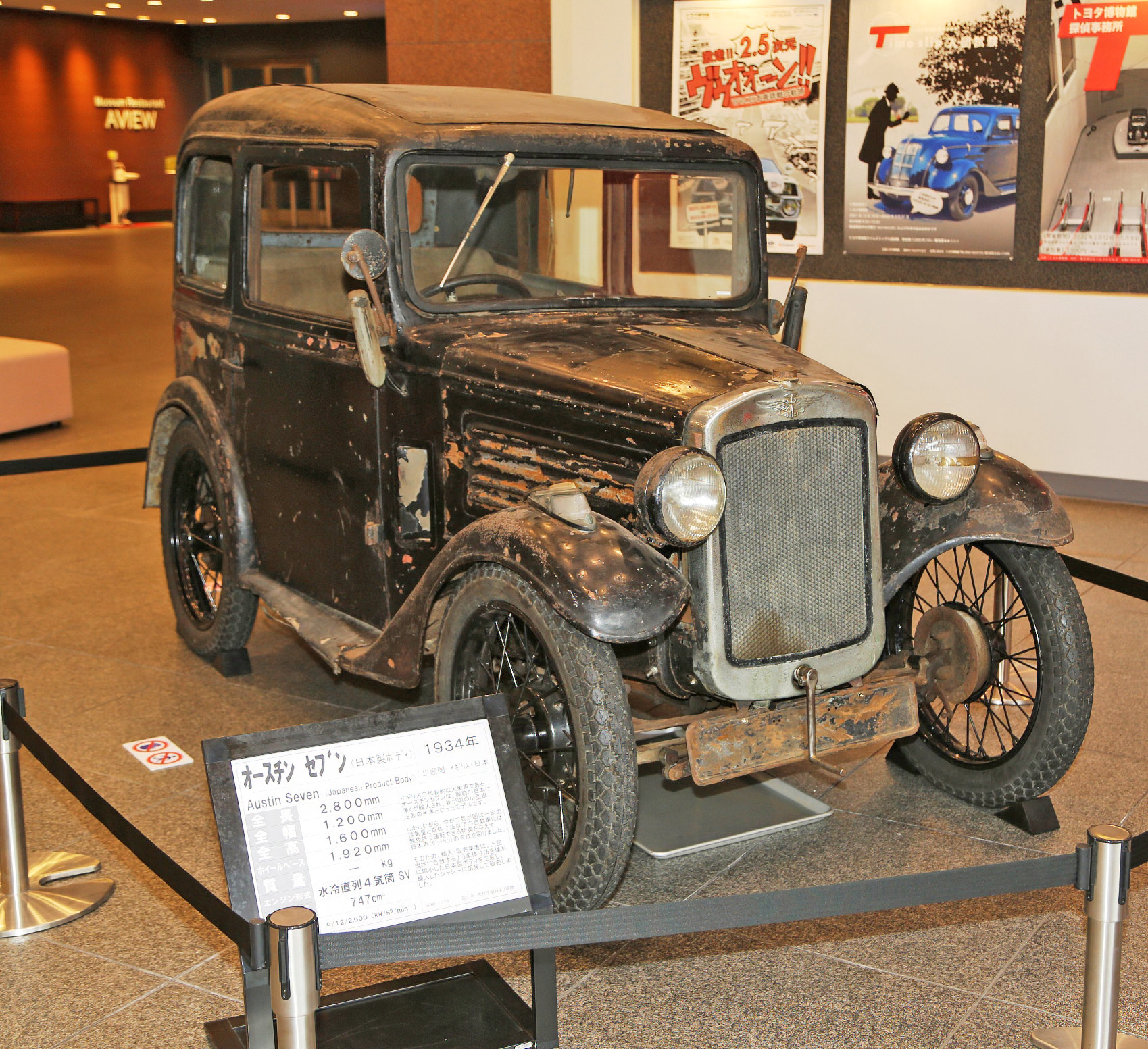
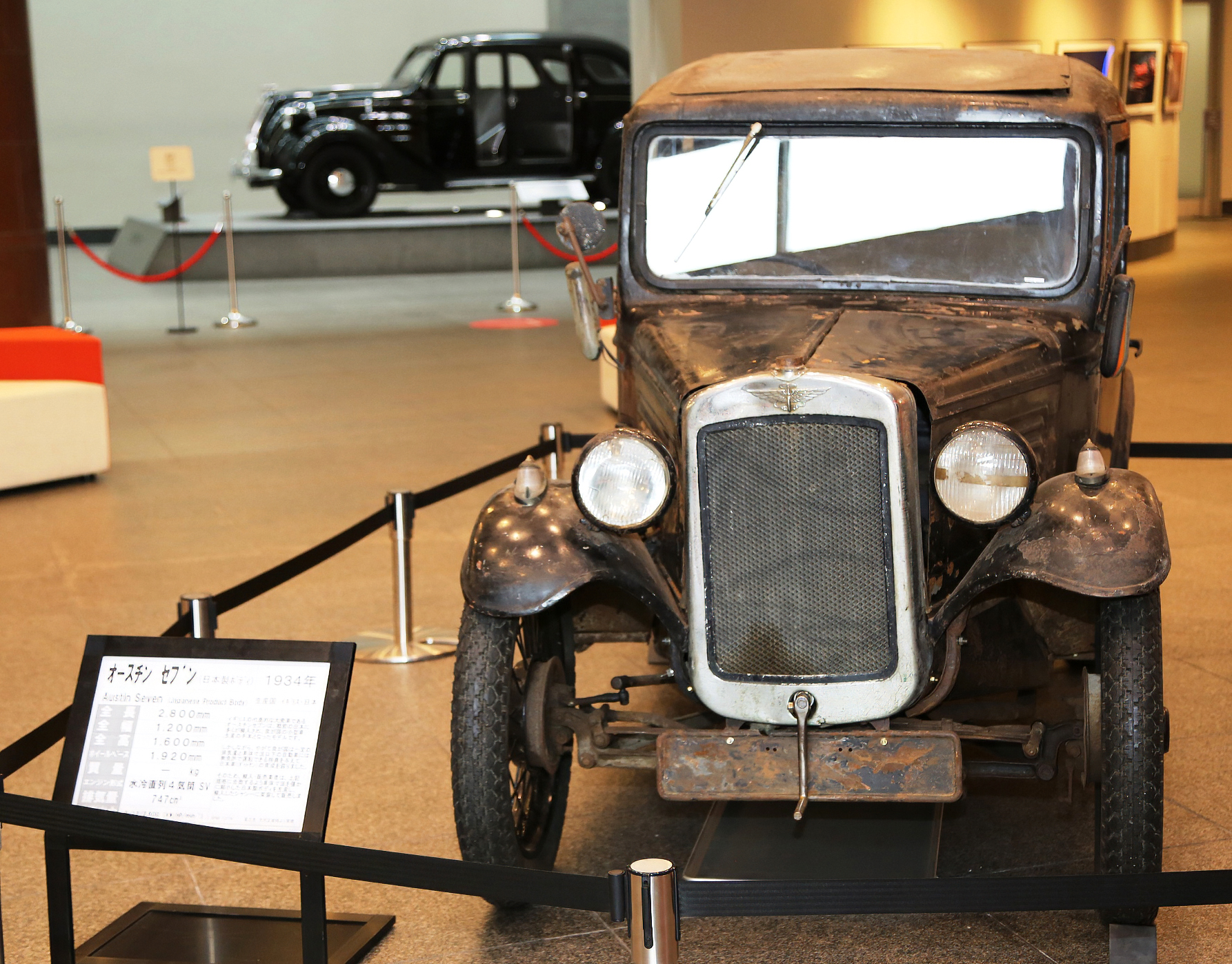
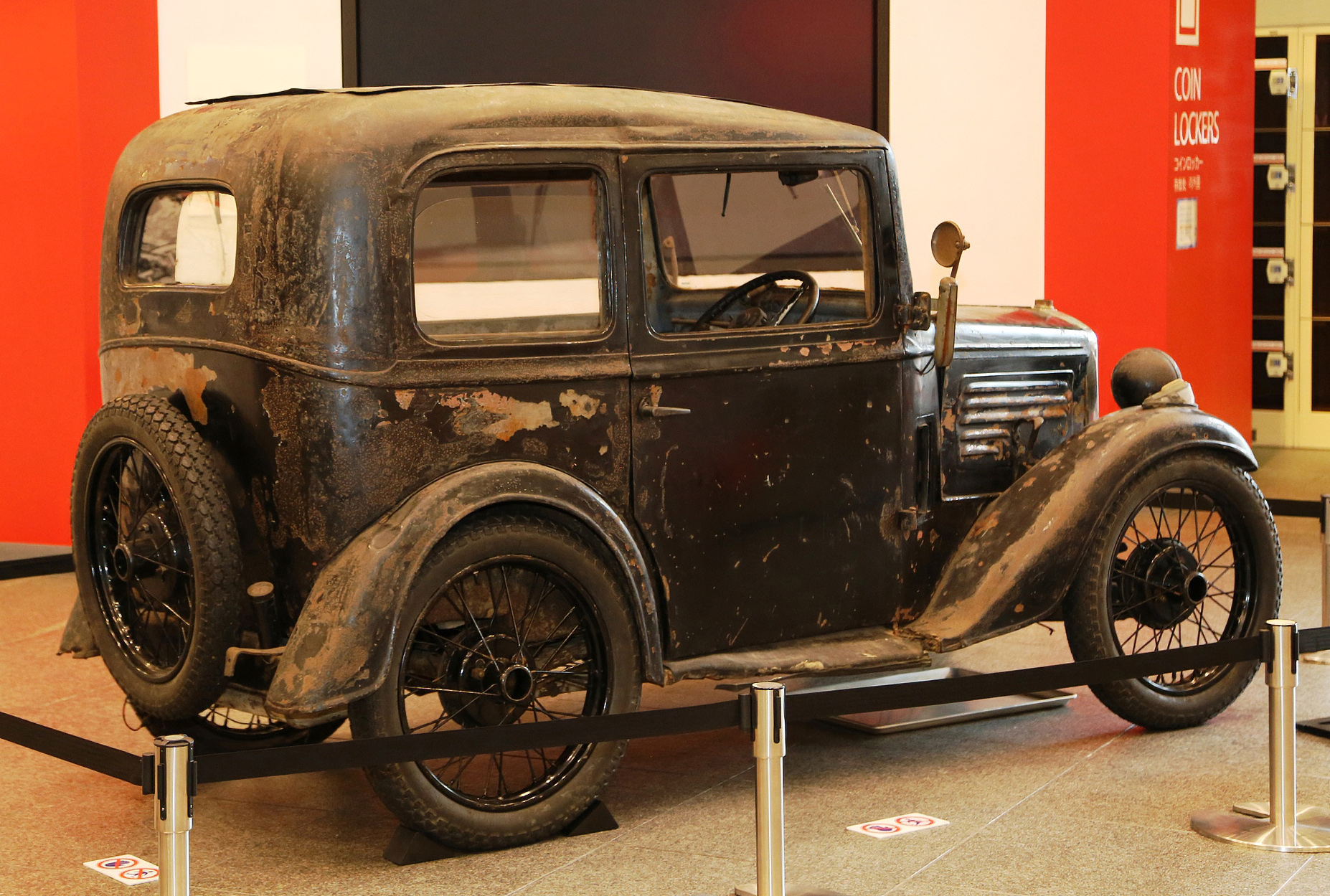
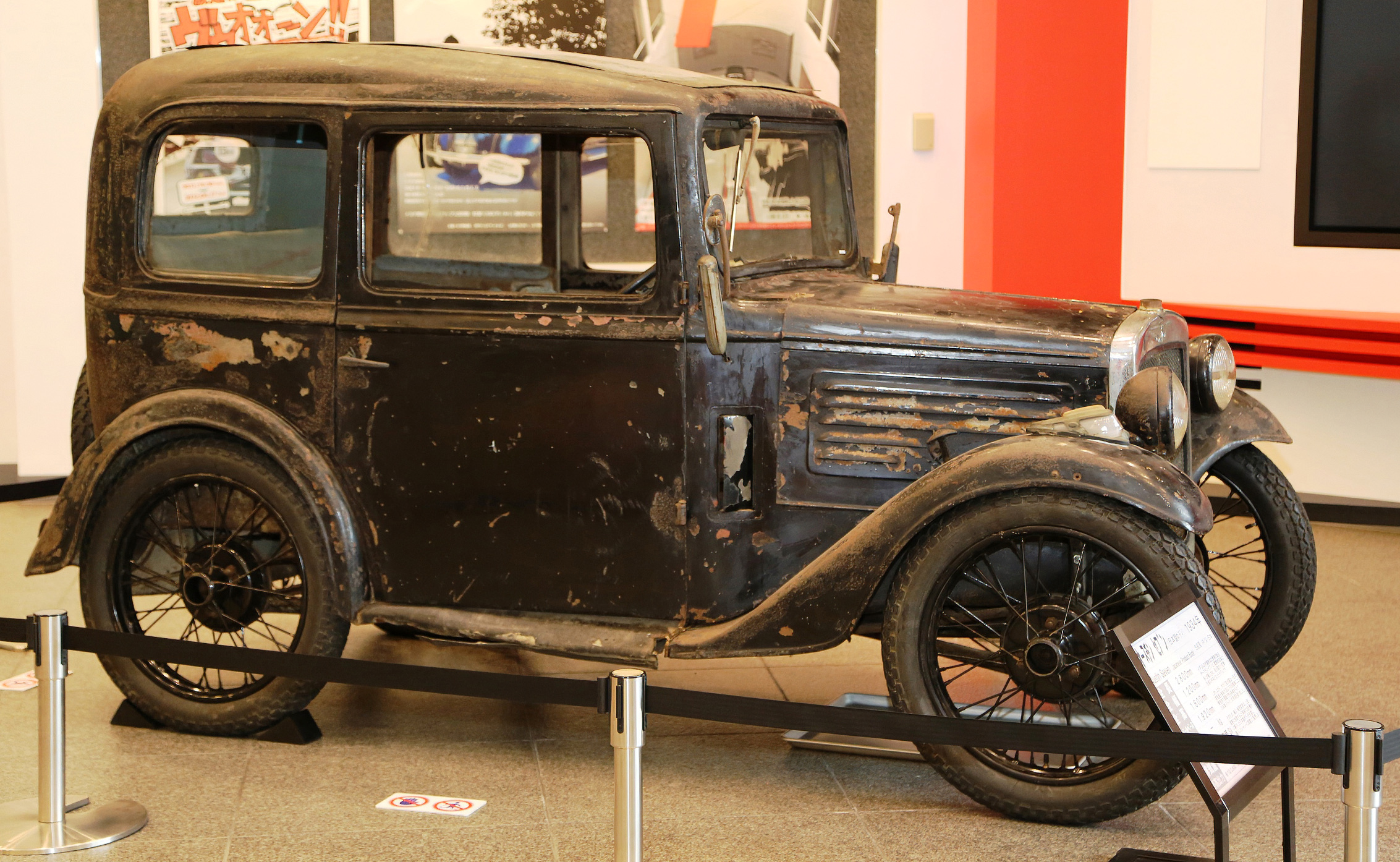
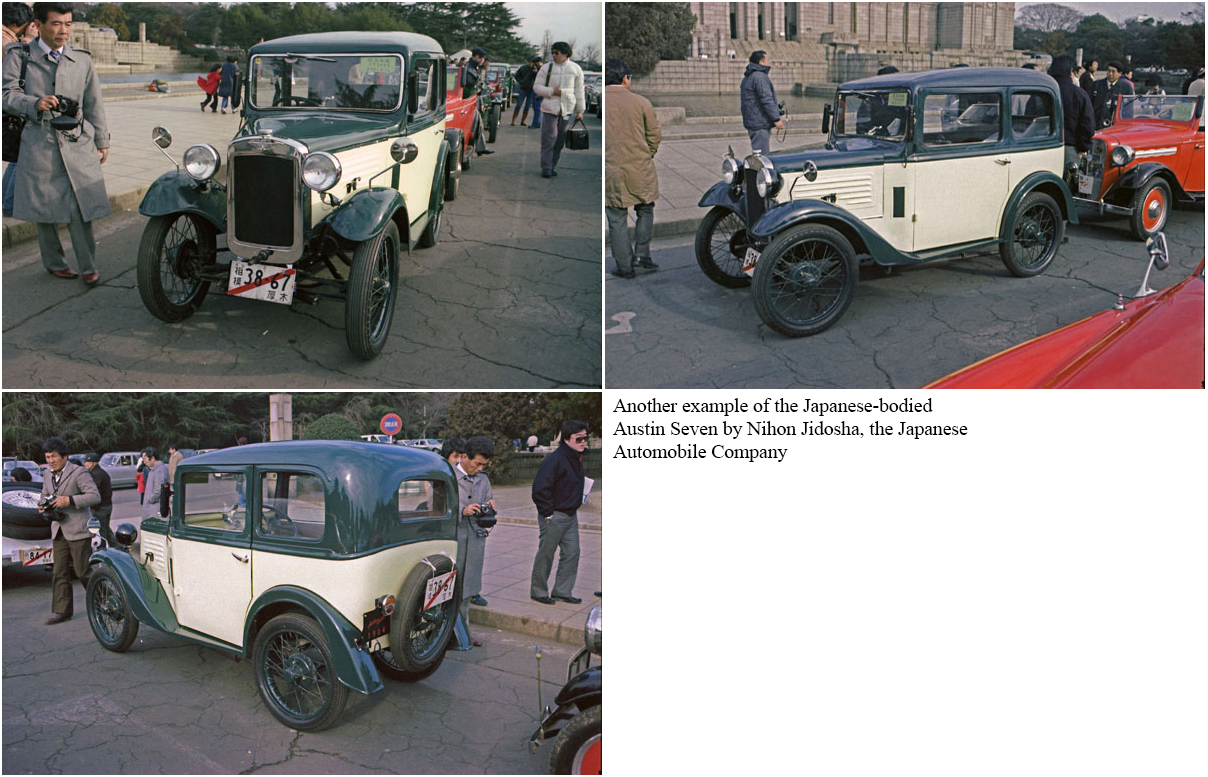
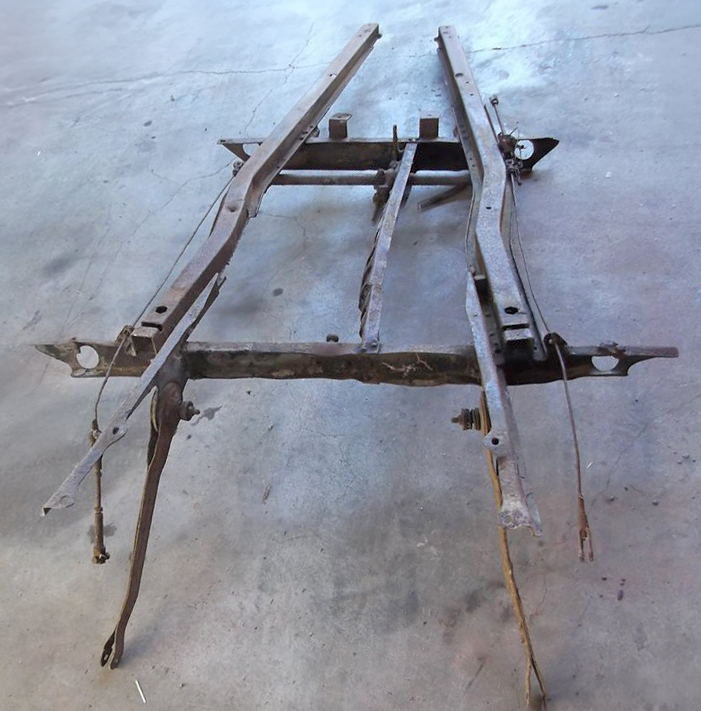
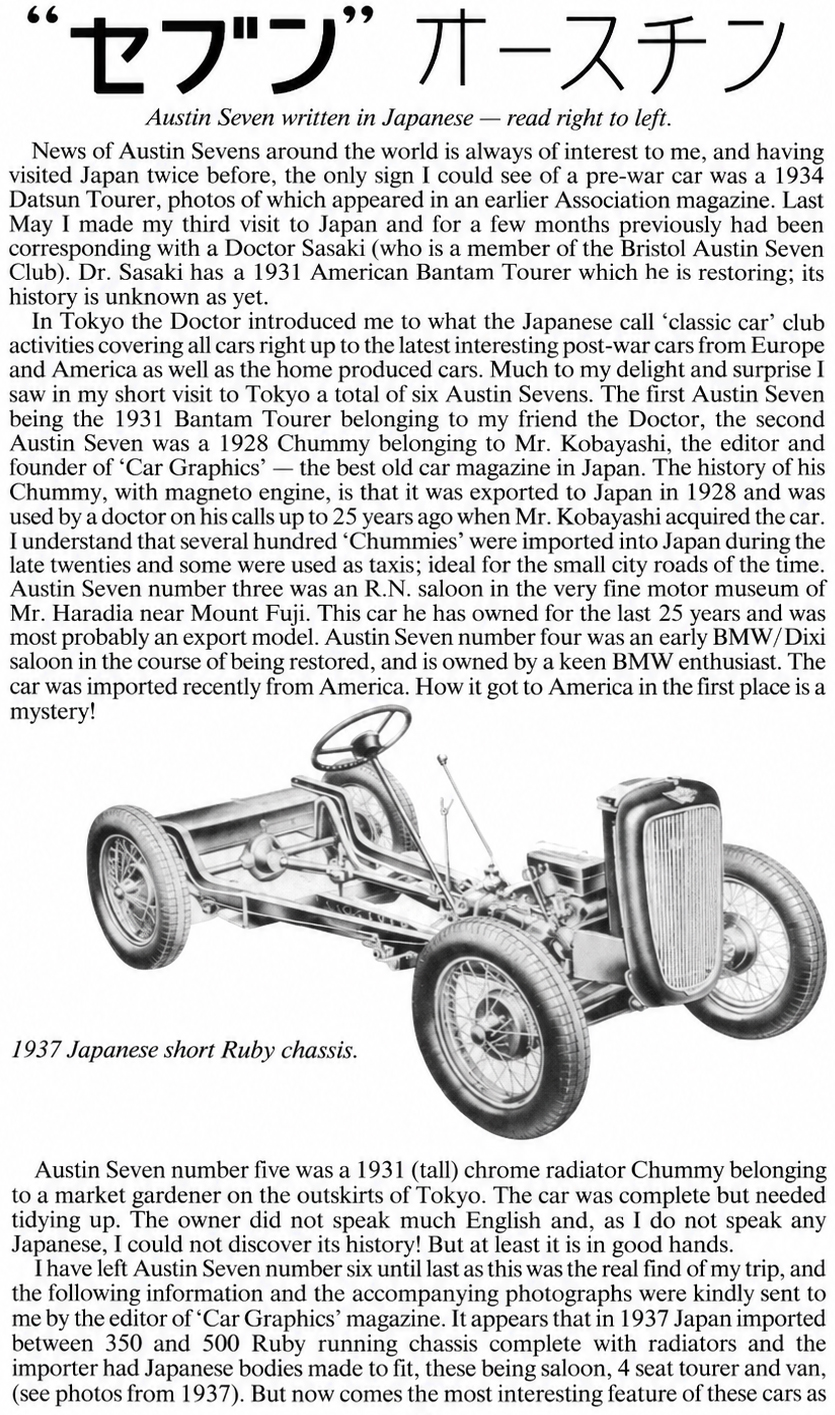
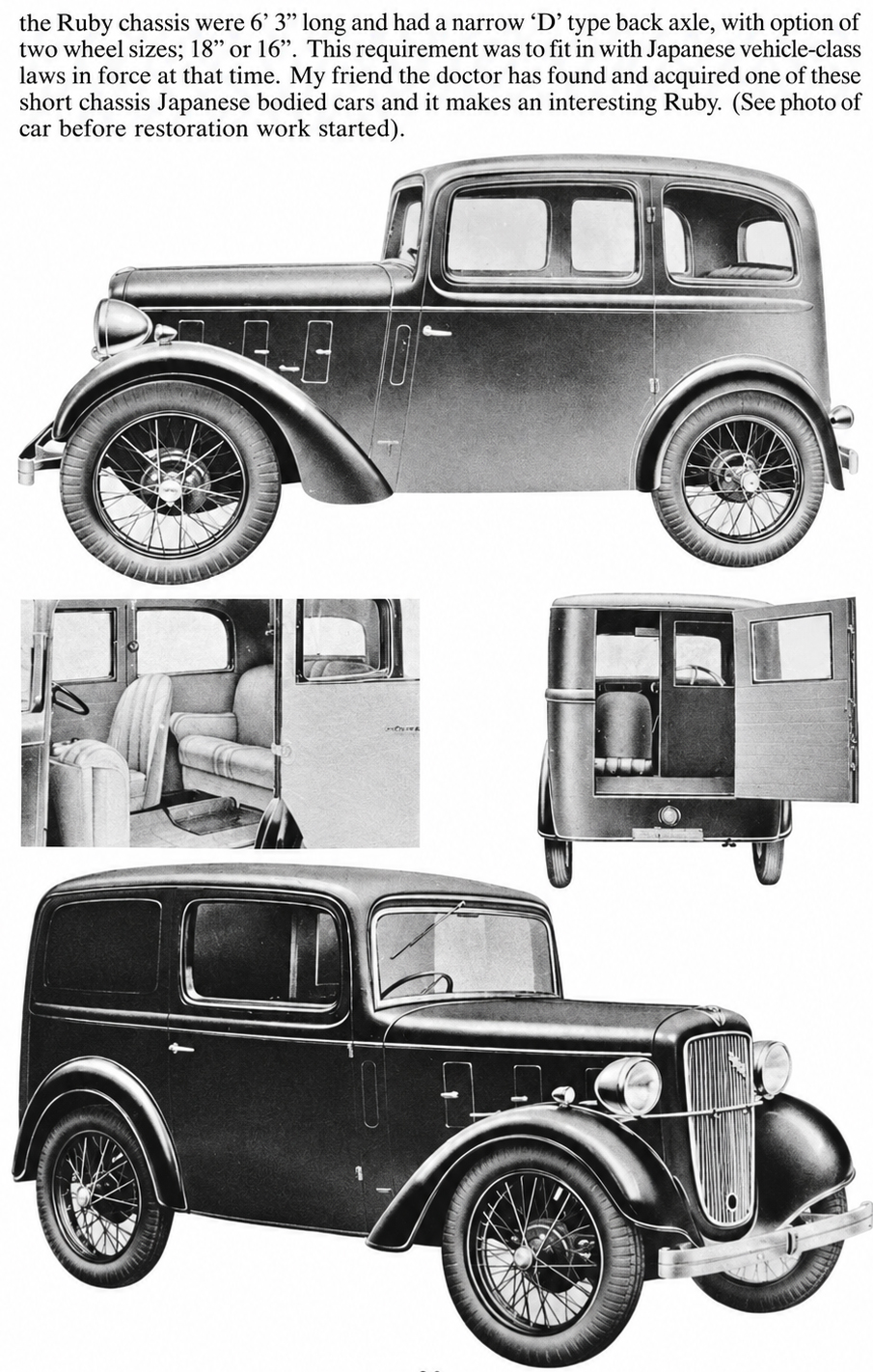
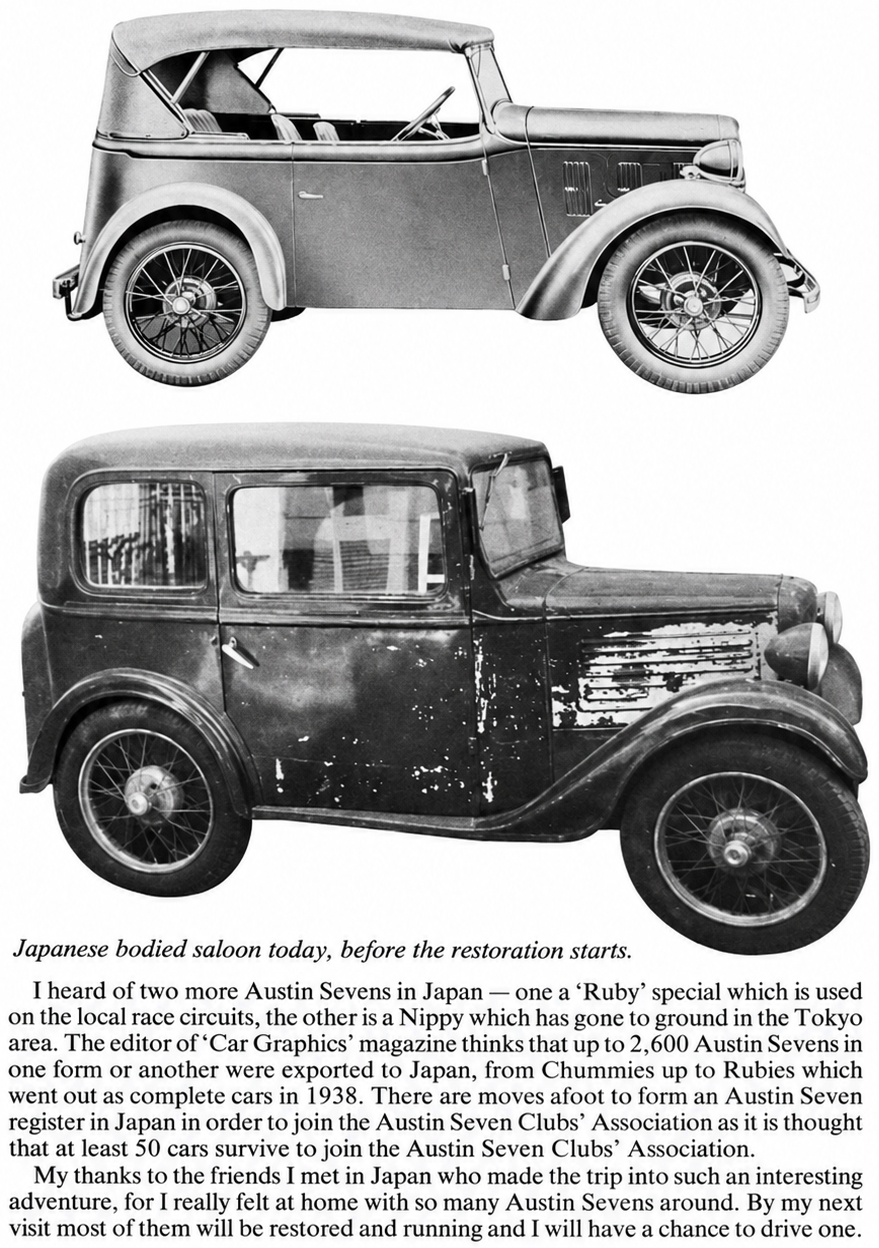
The Japanese connection is interesting: British-built Austin Sevens reached Japan both as complete cars and as chassis for locally manufactured bodies. Reports from Japan say several hundred were imported, including examples later clothed by Japanese coachbuilders. These were genuine Austins, but with Japanese bodies, not Japanese copies of an Austin. The special chassis existed because of Japan's 'small-car classification'. A Japanese photographic history published by Miki Press describes an allowance for small cars to be driven without the usual driving test, subject to limits on engine capacity and overall dimensions. It sets the dimensional limits at 2.8 metres long, 1.2 metres wide, and 1.6 metres high. These tight specifications made the Seven's increasing girth unsuitable for the Japanese home market and encouraged the use of specially ordered short chassis to be fitted with locally made bodies. It is perhaps better to describe these as 'pre-war small-car rules' rather than call them the later "kei class".
The often-quoted figure of 350-500 low-frame Austin chassis exported during 1934-35 comes from the Austin Seven Source Book, as reproduced in an Austin Seven Friends forum discussion. That account gives a wheelbase of 6 feet 3 inches, a track of 3 feet 4 inches, a D-type rear axle and Austin wire wheels carrying 4.00 × 18 tyres, together with Austin radiators and cowls. While these details are useful, the entry's identification of the cars as a Datsun added to the confusion. The number should therefore remain an estimate, not become a factory production record just because it's been repeated so often. A surviving car also provides some additional evidence: in January 2014, Junichi Sugimoto reported recovering a Japanese-bodied saloon and confirmed a 6-foot-3-inch wheelbase, a later-pattern D-type rear axle, and 18-inch wheels. If this car is compared to the contemporary Austin 7 RP Box Saloon, which used a 6-foot 9-inch wheelbase, it's clear that the Japanese car is on a 6-foot 3-inch chassis as the doors, instead of being square, are cut away to follow part of the arch of the rear wings. A principal body-shop name associated with the Japanese bodies was Nihon Jidosha, or the Japan Automobile Company. Miki Press identifies its Nakano works as the builder of a photographed 1934 Austin saloon. The long horizontal bonnet vents and skirted wings distinguish it from the British version. The author also notes that the wings resemble those on the Datsun Type 12, which was built at the same works and probably used the same press tooling, though that last point is an inference and not a documented fact. Other firms participated: the same history illustrates a 1937 Austin roadster bodied by Kirin Nainenki Kogyo, an Austin sub-dealer in Kanda.
Japanese photographs and the accompanying account can be seen here:
https://www.mikipress.com/m-base-archive/2014/04/post-63.html
There is firmer evidence still for the work of Nihon Jidosh. In April 2022, the Toyota Automobile Museum announced an exhibition of a 1934 Austin Seven whose body had been built by the company. Pleasingly, the museum displayed it in the condition its donor found it in 1968, letting visitors see the authentic materials and construction. An unrestored survivor nearly always tells us much more than one polished into perfection.
The museum's illustrated announcement is here:
https://toyota-automobile-museum.jp/news/detail/4352.html
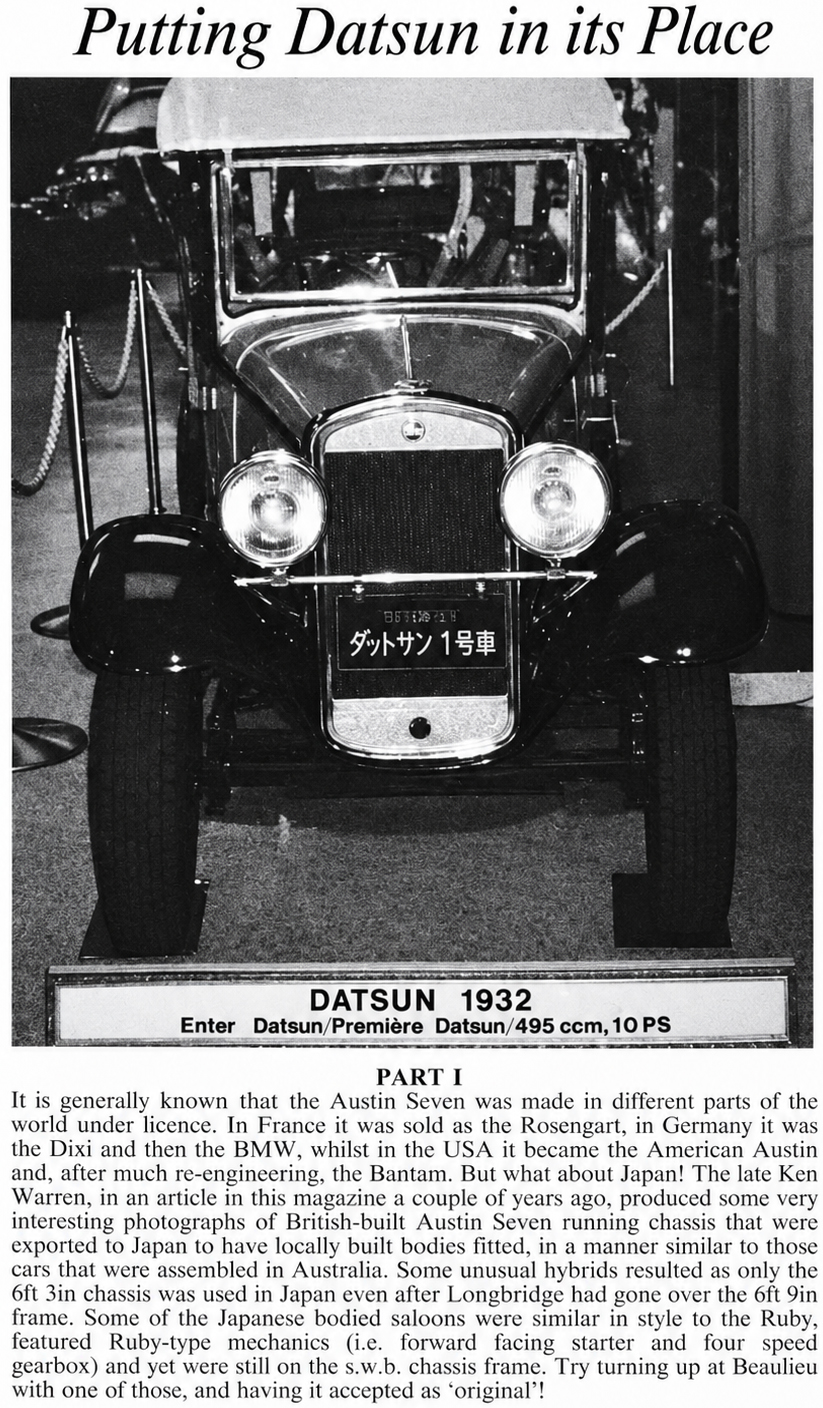
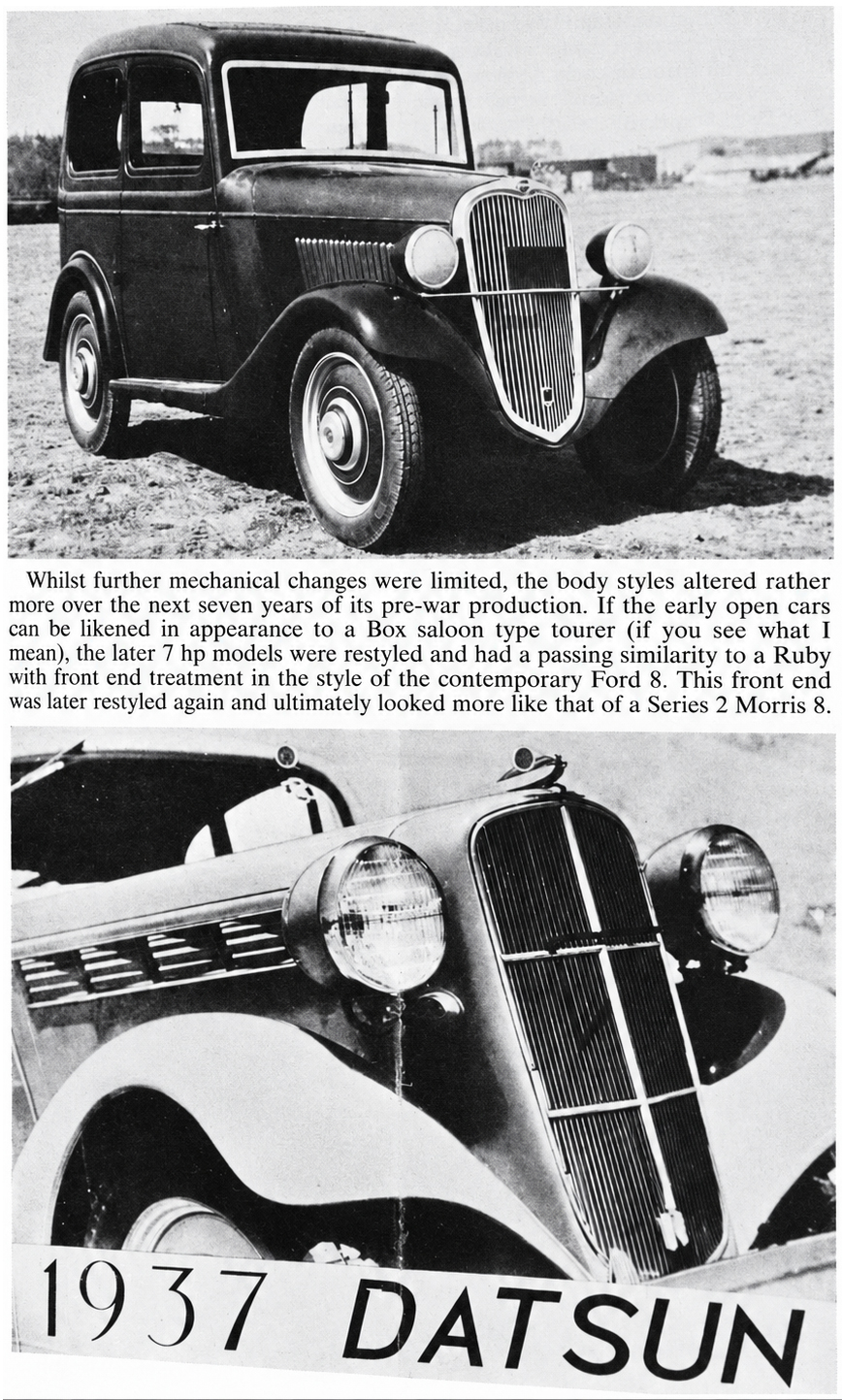
The Datsun chronology also needs to be separated. There was no single "Datsun 12/14" model. Nissan's own records date the Type 12 to October 1933, the Type 13 to April 1934 and the Type 14 to April 1935. The company, established as Jidosha Seizo in December 1933, became Nissan Motor in June 1934, and production began in Yokohama in April 1935. Thus, the Type 12 preceded the new plant's car production, while the Type 14 was the first to be made there.
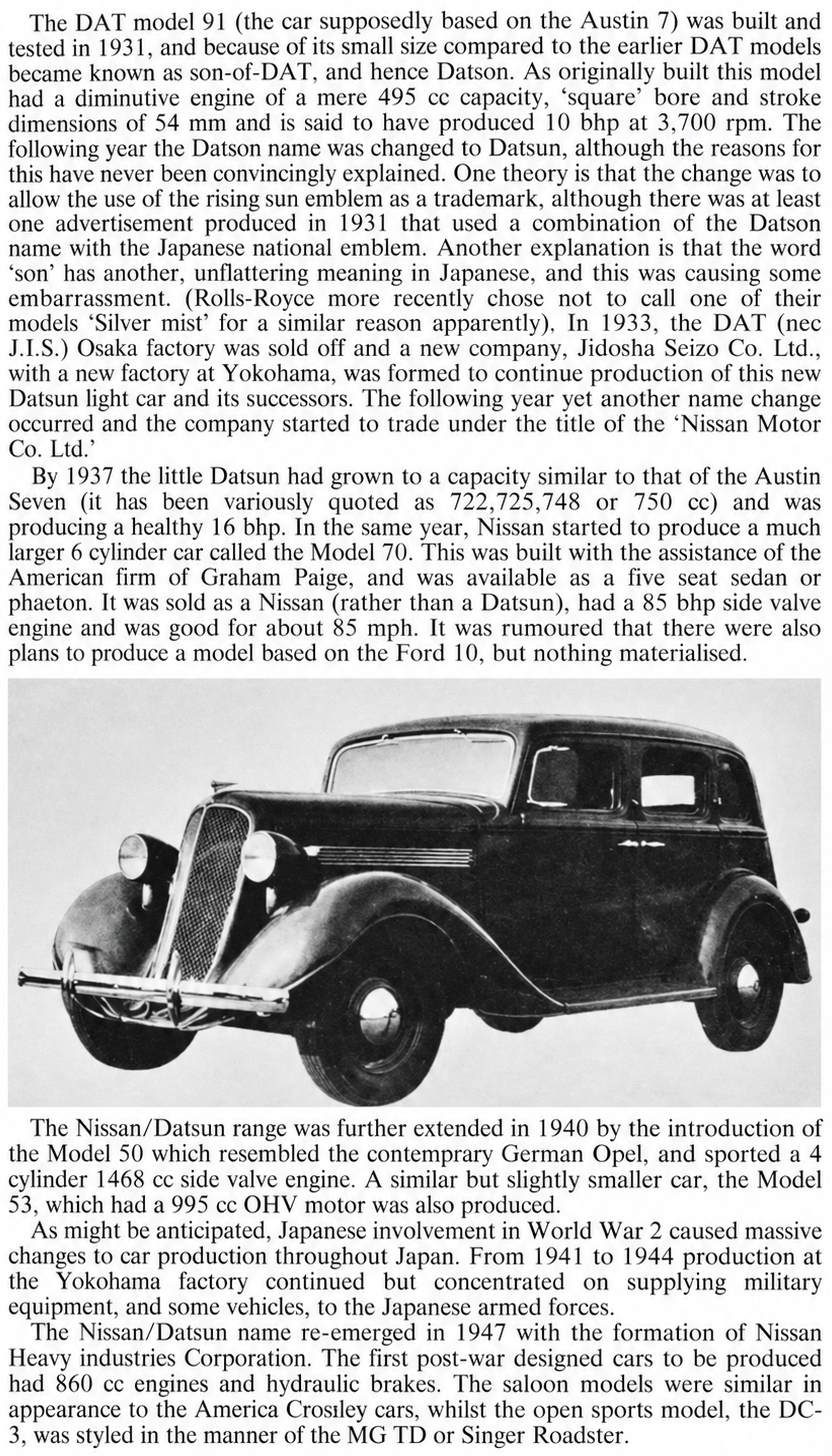
Not all of these cars used the same engine. Nissan lists its surviving 1933 Type 12 with a 748 cc side-valve four-cylinder engine, while the 1935 Type 14 had a new 722 cc unit producing 15 PS. The latter's wheelbase was 2,005 millimetres, against the special Austin's 1,905 millimetres. Nissan credits Ryuichi Tomiya with the Type 14's styling, including its distinctive rabbit mascot. Being of a similar size and having a fashionable radiator shape don't, by themselves, suggest much engineering pedigree….
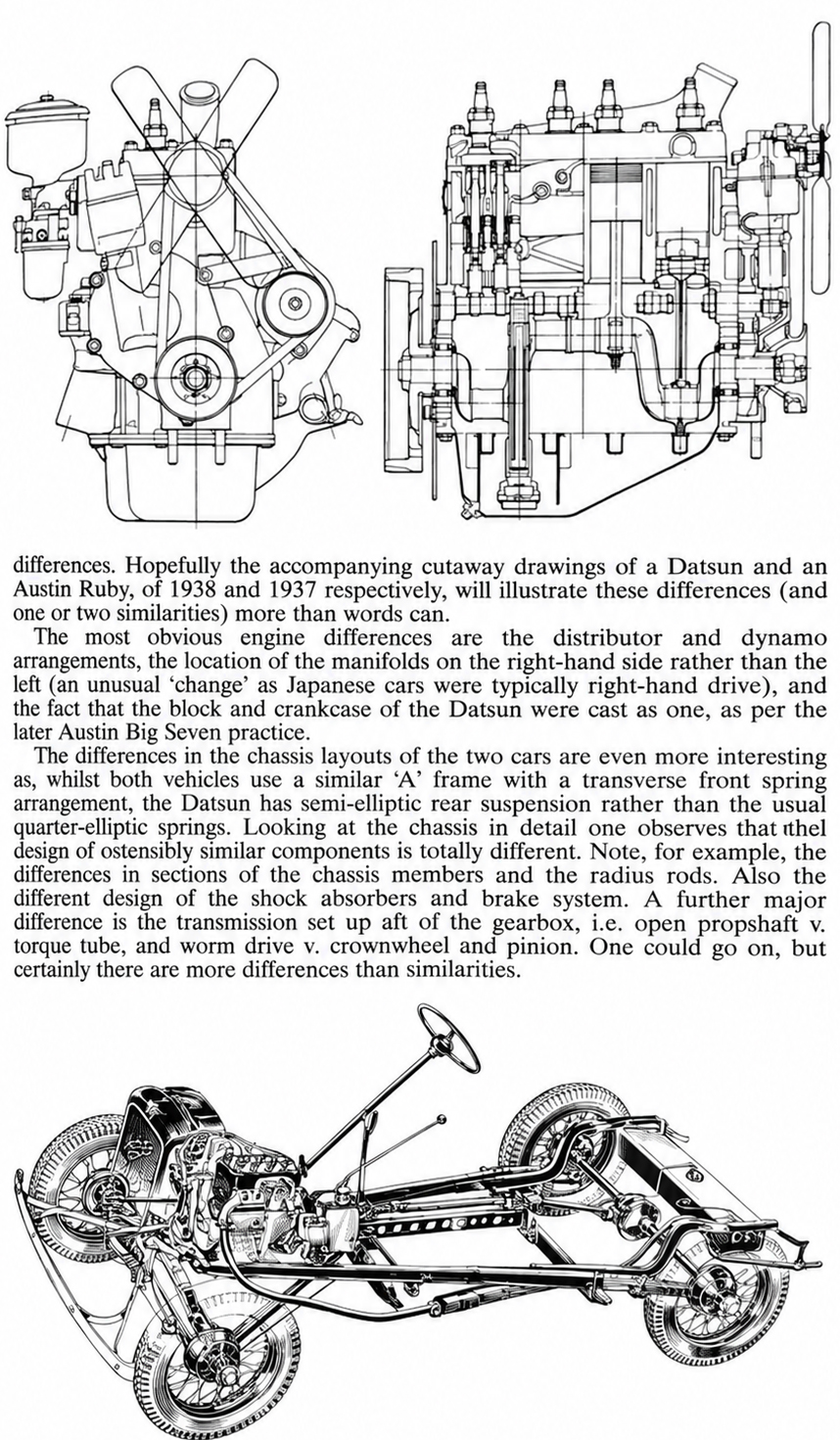
One particularly useful correction appeared in Motor Sport in April 1978. Shotaro Kobayashi, editor of Japan's Car Graphic and an Austin Seven owner, wrote it. He rejected the copying and licensing claims, explaining that the Datsun used a conventional ladder frame and half-elliptic rear springs. He also described substantial mechanical differences, including a rigid, integral cast-iron cylinder block and crankcase, and lubrication arrangements quite different from Austin's.
Kobayashi also challenged a British Datsun catalogue that claimed it had been manufactured under licence in 1933. Thus, the story apparently repeated itself even in the maker's official promotional material. His criticism of poor straight-line stability concerned the pre-war Datsun and its flexible front spring mounting; it should not be transferred to Japanese-bodied Austins as evidence that their tall bodies made them unstable. His letter is available here:
https://www.motorsportmagazine.com/archive/article/april-1978/103/datsun-origins/
Sir Herbert Austin nevertheless had understandable suspicions. According to the National Motor Museum, he imported a Datsun Type 14 into Britain in 1935 so that Austin could examine it for possible patent infringement. With no evidence to the contrary, no action followed. The car was never registered for road use and was stored long-term, eventually entering the museum's collection with help from Nissan Europe. It survives as a particularly useful witness: the car that prompted the investigation but laid to rest the idea that the Seven influenced it in any way. But the absence of proceedings does not prove Japanese designers never studied an Austin (they almost certainly would have, and contemporary small Ford models, and why not?), but it does not support the claim that this was a licensed Seven.
The museum's account is here:
https://www.beaulieu.co.uk/news/national-motor-museum-blog-may-2016/
The genuine Nissan-Austin manufacturing connection came much later. In Japan, following WW11, there was a 4-year restriction on the manufacture of passenger cars, this being lifted in October of 1949. Now free to begin manufacture, it was clear that some shortcuts should be made and so, as the economy started to recover and demand for cars began to exceed supply, a technical cooperation agreement was reached by Nissan in 1952 with the Austin Motor Company.
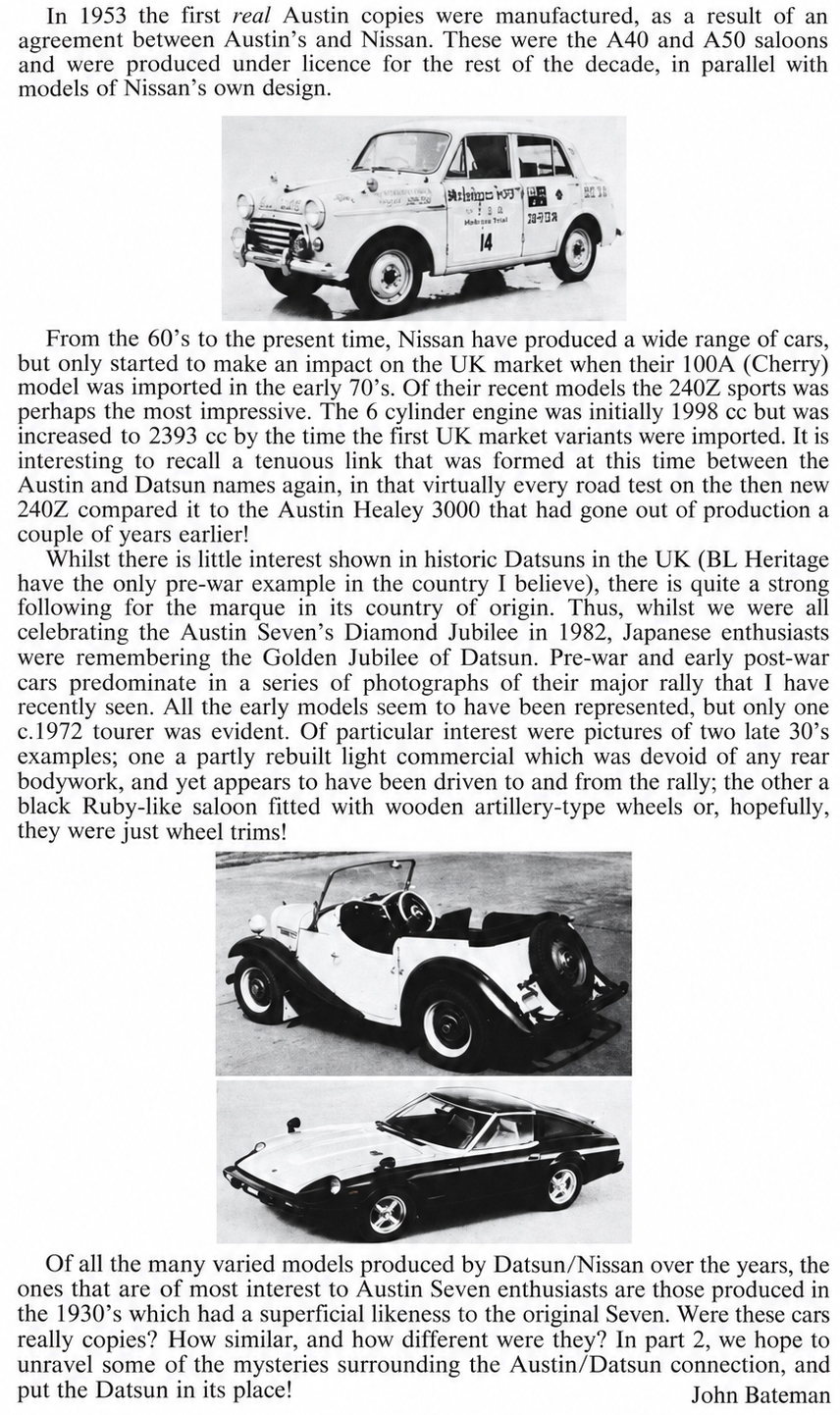
It was thus that Nissan Motor began assembly of the Austin A40 Somerset in April 1953, initially using imported components, with the agreement expressly providing for increasing Japanese manufacture. Nissan's Japanese account even records the date the first car left the line: 4 April 1953. That actual car survives in the maker's heritage collection. The licensing programme later included the A50 Cambridge, with Nissan recording the change to A50 assembly in December 1954 and achieving entirely Japanese-sourced manufacture in August 1956. Production of the A50 continued until December 1959, and Nissan (don't you love this) preserved both the first and last cars made. Thus, this affair was a well-documented post-WWII manufacturing relationship with technical assistance and progressive local production, involving post-war Austin cars, but not the pre-war Seven.
Nissan's account is here:
https://www.nissan-global.com/EN/HERITAGE_COLLECTION/short_story/en_p13-01.html
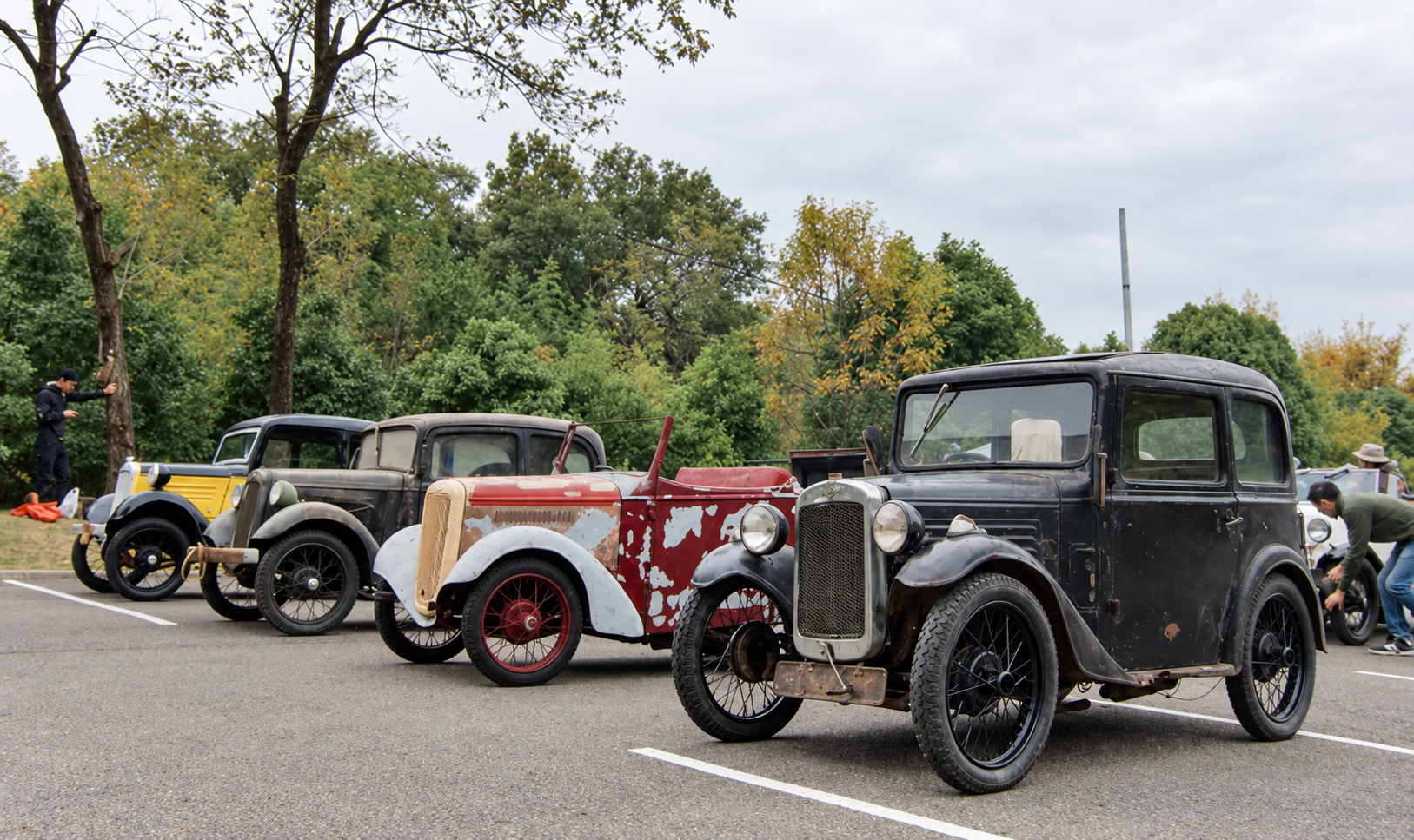
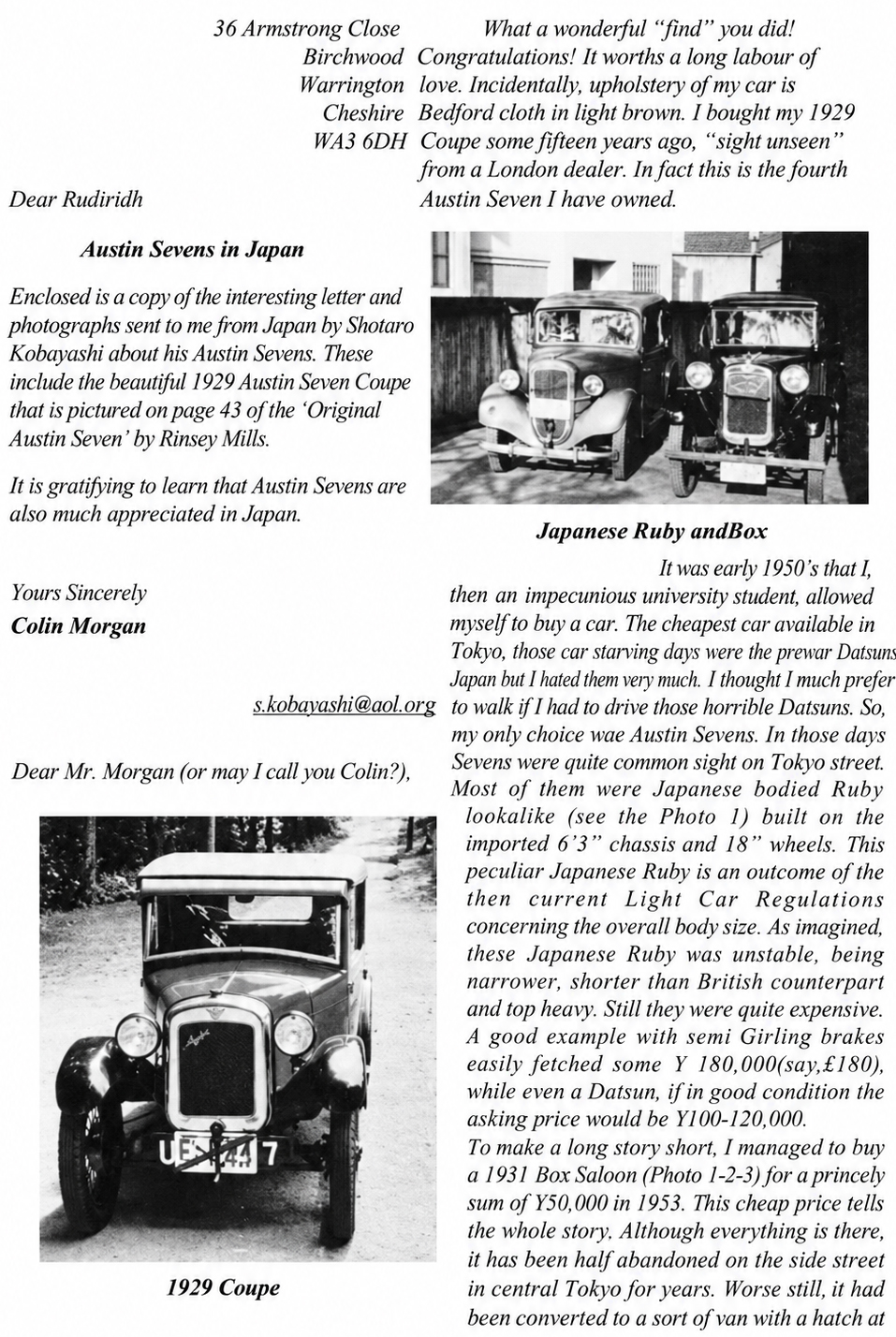
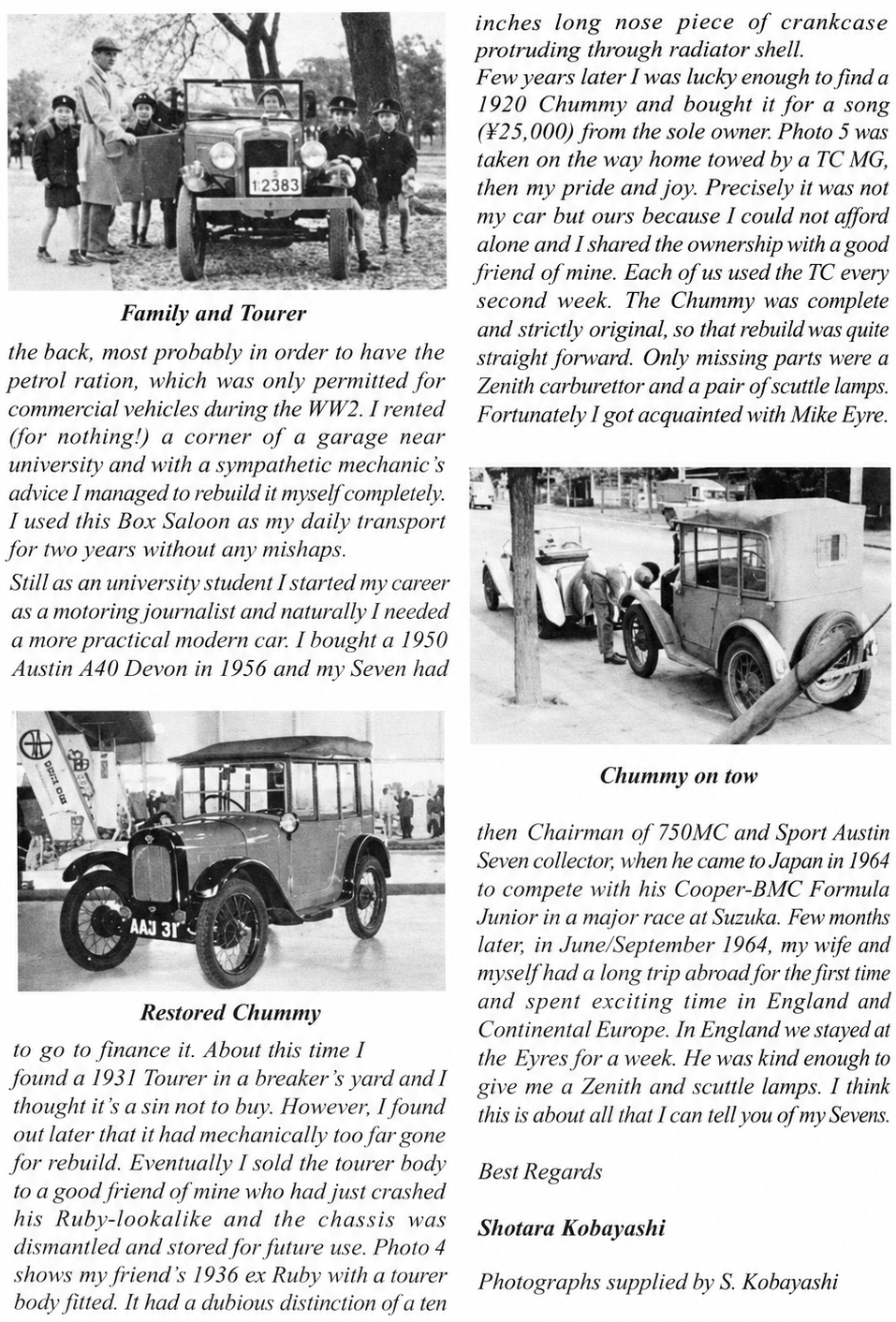
The Japanese Austin Seven story has also attracted serious study in its own right. Kobayashi made the locally bodied cars a lifelong research interest. Following his death in 2013, the first Austin Seven Day was held at the Toyota Automobile Museum on 9 November 2014, organised at Junichi Sugimoto's initiative. The report records nearly thirty participating cars, four with Japanese bodies, together with a display of Kobayashi's cars and collected material. These were surviving examples being examined by knowledgeable owners, not merely names copied from an overseas production list. The illustrated Japanese report is here:
https://s.response.jp/article/2014/11/14/237395.html
Research links include this with scans of the very detailed articles on Japanese-bodied Austin Sevens from the Austin 7 Clubs' Association Magazine. Unfortunately the scans have been heavily compromised by Photobucket and are difficult to read. They have now been digitally restored and are attached below:
https://www.austinsevenfriends.co.uk/old_forum_backup/pub25.bravenet.com/forum/static/showbe09.html?usernum=2099944454&frmid=5&msgid=964562&cmd=show
And here:
https://www.austinsevenfriends.co.uk/old_forum_backup/pub25.bravenet.com/forum/static/show792f.html? usernum=2099944454&frmid=5&msgid=964738&cmd=show
And here, which has all the links at the bottom of the page, to give more of the story.
https://www.austinsevenfriends.co.uk/old_forum_backup/pub25.bravenet.com/forum/static/show00b4.html?usernum=2099944454&frmid=5&msgid=964553&cmd=show
Additional information appears here, where a Japanese enthusiast echoes the story: "Several hundred were imported; some arrived as chassis only and then received Japanese-made bodies." See this link:
https://s.response.jp/article/2014/11/14/237395.html?gp=1_email_20141114&utm
Another Japanese A7 website (easily translated by Google, etc)
https://www.hisour.com/data/austin_7/
For more on the history of Nissan in English, see:
https://www.nissan-global.com/EN/BOOK/90TH_ANNIVERSARY/#page=5
Click the hyperlinks to learn more, and use Google or another translator for the Japanese entries; they're really interesting..
|
|